
Drip Irrigation vs. Sprinkler Systems for Home Gardens

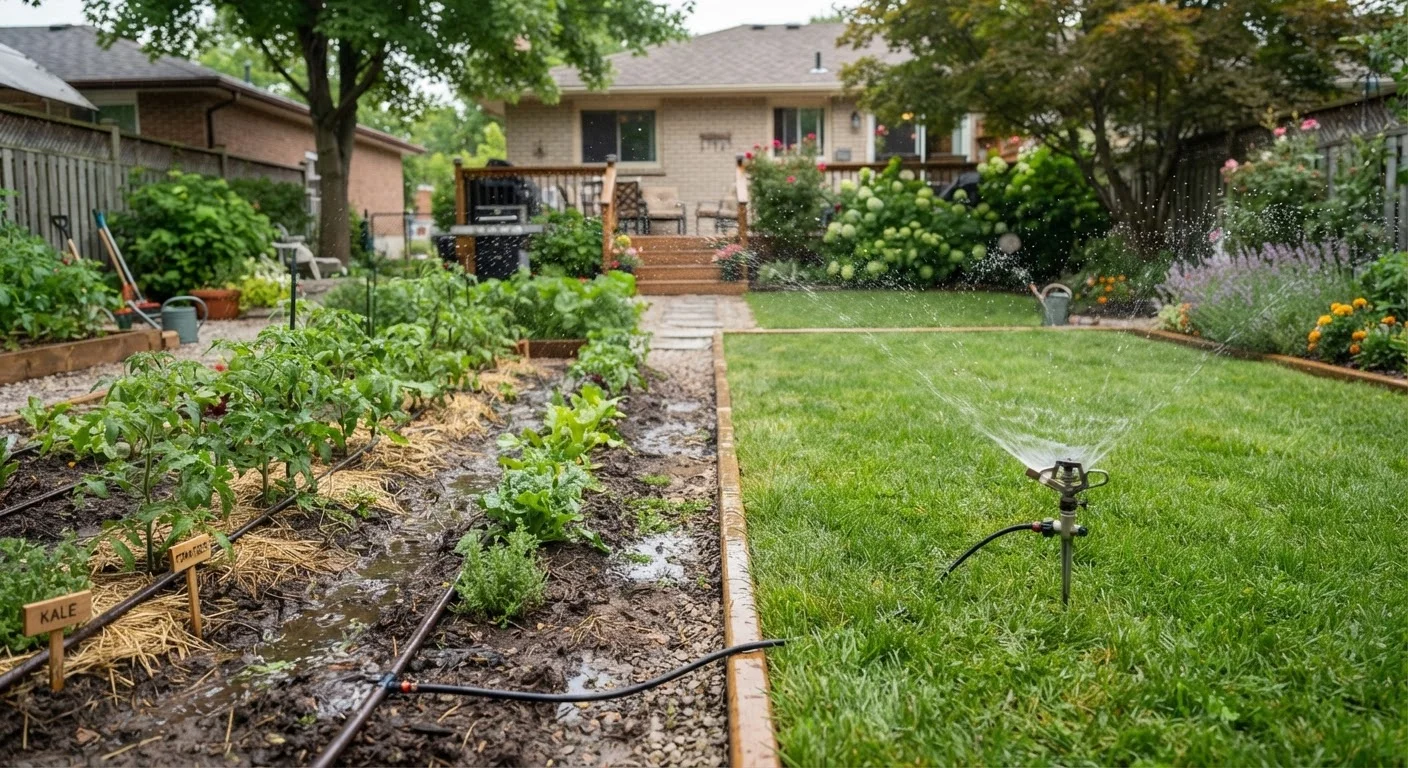
Photo: InsightsBlock.com | Access Information With Ease editorial
Key Takeaways
- Drip irrigation delivers water directly to root zones, reducing evaporation and weed growth.
- Sprinkler systems cover large areas quickly but lose more water to evaporation and wind drift.
- Drip systems typically cost more upfront per garden bed but can lower ongoing water use.
- Sprinklers suit lawns and ground covers; drip lines suit rows of vegetables, shrubs, and trees.
- Both systems can be automated with timers for consistent, hands-free watering schedules.
- Local climate, soil type, and plant layout should drive your system choice more than cost alone.
How Each System Works
Understanding the mechanics of each system makes it easier to match one to your garden's needs.
Drip irrigation uses a network of flexible tubing and small emitters placed near individual plants. Water seeps out slowly - typically at one to four gallons per hour - directly into the soil at root level. Because the water never reaches the leaf surface, evaporation is minimized and fungal problems are less likely to develop.
Sprinkler systems distribute water through pressurized heads that spray water into the air, mimicking rainfall. Pop-up heads are the most common type for residential lawns. Coverage patterns range from fixed arcs to full 360-degree rotation, making them well-suited for open areas. However, spray that lands on foliage or paved surfaces is water that never reaches plant roots.
Both systems can be connected to an outdoor faucet or a dedicated irrigation valve and paired with an automatic timer. The core difference lies in where the water lands and how efficiently it gets there. For context on why timing your irrigation matters as much as the method, see our guide on lawn watering schedules.
| Criterion | Drip Irrigation | Sprinkler Systems |
|---|---|---|
| Water delivery method | Slow drip at root level | Overhead spray coverage |
| Best suited for | Vegetables, shrubs, trees, containers | Lawns, ground covers, open beds |
| Water efficiency | High - minimal evaporation | Moderate - spray drift and evaporation |
| DIY installation | Generally accessible | Complex for in-ground systems |
| Upfront cost (in-ground) | Lower per bed | Higher overall installation |
| Maintenance effort | Emitter flushing, tubing checks | Head adjustments, winterization |
| Foliage wetting | None - soil only | Yes - can increase disease risk |
| Automation compatibility | Yes - timer-ready | Yes - timer and controller options |
Installation, Cost, and Maintenance
Neither system is truly plug-and-play, but their complexity differs significantly.
Drip systems are generally DIY-friendly. Most kits include mainline tubing, emitters, connectors, and a filter. You lay the tubing along planting rows, punch in emitters near each plant, and connect to a timer. The upfront material cost for a small garden bed is modest, but costs scale with garden size. Emitters can clog over time and need periodic flushing or replacement. Tubing exposed to sunlight degrades faster, so covering it with mulch extends its life - a strategy explored in our article on mulching your garden beds.
In-ground sprinkler systems usually require professional installation involving trenching, pipe laying, and zone programming. This raises the upfront cost considerably. Above-ground oscillating or rotating sprinklers are far cheaper and portable, but they lack the consistency of a permanent system. Winterization - draining lines before a freeze - is an annual maintenance task in colder climates that drip systems also require.
30-50%
Potential water savings with drip vs. sprinkler
The U.S. Environmental Protection Agency notes that drip irrigation can use 30-50% less water than conventional sprinkler systems when applied correctly.
50%
Outdoor water use lost to inefficiency
According to the EPA's WaterSense program, roughly half of all outdoor water used by US households is wasted due to evaporation, wind, or runoff.
For raised beds specifically, drip lines are often the more practical fit given how quickly those environments dry out. Our article on raised garden bed trade-offs covers why moisture management matters so much in those setups.
Water Efficiency and Plant Suitability
Efficiency and plant type are the two factors most likely to steer your decision.
Drip irrigation is widely recognized by water-management professionals as the more efficient delivery method for garden beds. Because water is applied slowly at root level, less is lost to evaporation, wind, or surface runoff. This makes drip a practical choice in drought-prone regions or where water rates are high. It also reduces soil compaction and minimizes weed germination between rows, since the spaces between emitters stay drier.
Sprinklers, by contrast, are the appropriate tool for turf grass - a plant type that absorbs water across its entire surface and root system simultaneously. Trying to drip-irrigate a lawn is impractical. Sprinklers are also a reasonable choice for dense ground covers, wildflower meadows, or any planting where individual plant spacing is too tight to use emitters effectively.
A common misconception is that watering more frequently is always better. Our guide on lawn care myths addresses how overwatering - regardless of the system used - is one of the most repeated homeowner mistakes. Both drip and sprinkler setups benefit from smart scheduling that reflects actual soil moisture and plant needs rather than a fixed daily routine.
This article provides general information for educational purposes. Water costs, regulations, and permit requirements for irrigation systems vary by location - check with your local water utility or municipality before installing a permanent system.
The content provided on our blog site traverses numerous categories, offering readers valuable and practical information. Readers can use the editorial team’s research and data to gain more insights into their topics of interest. However, they are requested not to treat the articles as conclusive. The website team cannot be held responsible for differences in data or inaccuracies found across other platforms. Please also note that the site might also miss out on various schemes and offers available that the readers may find more beneficial than the ones we cover.