
Lawn Watering Schedules: Why Timing Matters More Than Volume

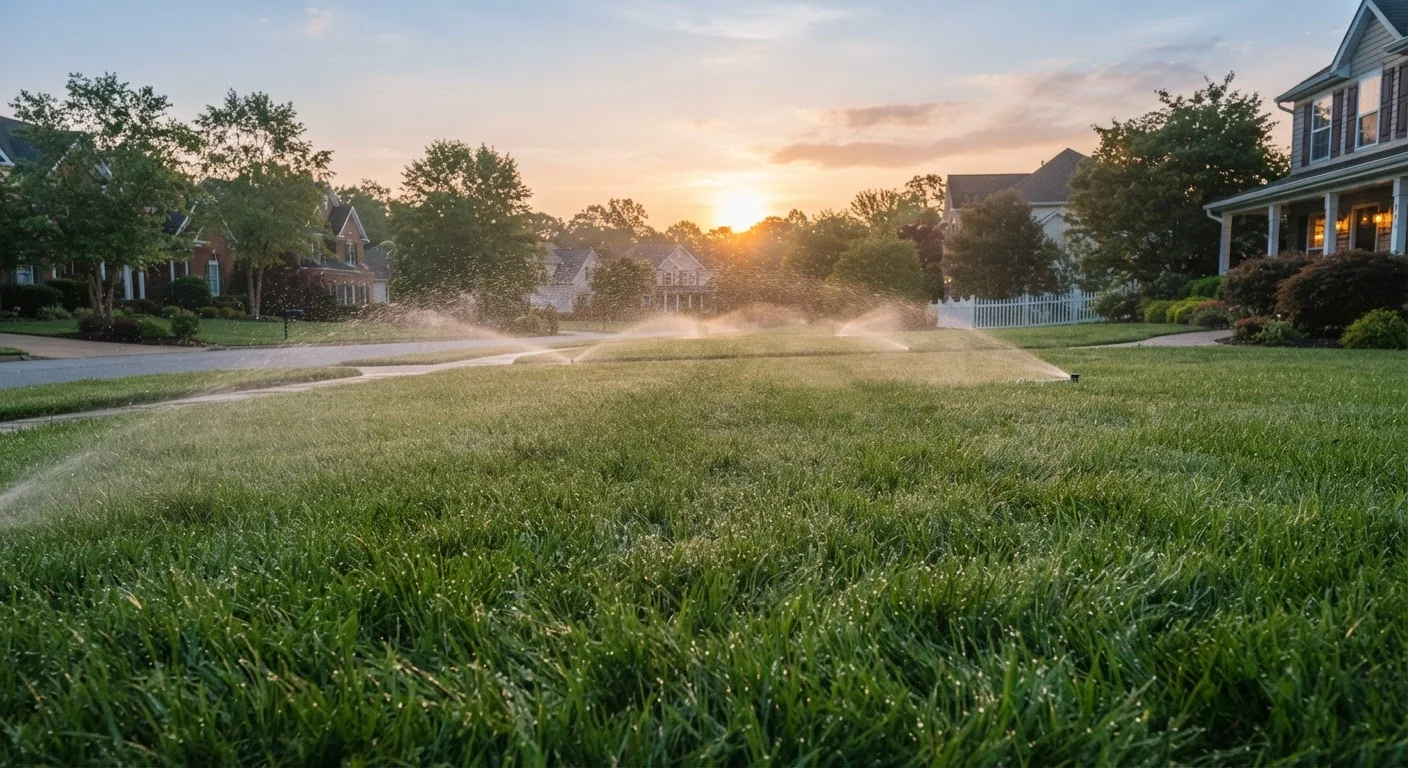
Photo: InsightsBlock.com | Access Information With Ease editorial
Key Takeaways
- Watering early in the morning reduces evaporation loss and fungal disease risk.
- Deep, infrequent watering encourages roots to grow deeper into the soil.
- Evening watering leaves grass blades wet overnight, promoting fungal diseases.
- Most lawns need roughly one inch of water per week, including rainfall.
- Soil type and grass species both affect how often and how long you should water.
- Adjusting your schedule seasonally prevents both underwatering and wasteful overwatering.
Why Timing Beats Volume Every Time
Many homeowners focus almost entirely on how much water their lawn receives, dialing in sprinkler run times or counting gallons. But the when of watering has an outsized effect on how efficiently that water is used-and how healthy your grass actually becomes.
Water applied at the wrong time of day can evaporate before it ever reaches the root zone, run off hardened soil, or sit on grass blades long enough to trigger fungal disease. Correcting timing alone-without changing volume-often produces a visible improvement in lawn health within a few weeks.
This principle is part of a larger picture of seasonal lawn care. For a full overview, see our year-round lawn and garden care playbook.
~50%
Outdoor water lost to evaporation or runoff
According to the US Environmental Protection Agency (EPA), roughly half of outdoor water use is wasted due to inefficient irrigation practices including poor timing.
1 inch
Typical weekly water need for most lawns
University cooperative extension programs across the US generally recommend approximately one inch of water per week, combining rainfall and irrigation.
6-8 inches
Target soil depth for effective root watering
Turfgrass specialists advise wetting soil to six to eight inches deep per session to encourage deep root development and drought resilience.
The Morning Window: Why 6-10 a.m. Works Best
Early morning is the most effective watering window for most US lawns. During these hours, temperatures are lower, wind speeds are typically calmer, and sunlight intensity hasn't yet peaked-all factors that reduce evaporation. Water applied in the morning also has time to soak into the soil before midday heat accelerates surface drying.
Equally important: grass blades dried by late morning sun are far less hospitable to fungal pathogens than blades that stay wet through a cool evening. Diseases like brown patch, dollar spot, and gray leaf spot thrive in prolonged moisture on warm grass tissue.
Use a Rain Gauge to Stay Accurate
If your soil is compacted and water tends to pool or run off rather than absorb, improving soil structure can dramatically increase how effectively timed irrigation actually works. Our lawn aeration guide explains when and how aeration helps water penetrate more efficiently.
Deep and Infrequent: The Root-Zone Principle
Watering deeply and less frequently is consistently recommended by turfgrass extension specialists. The reasoning is straightforward: when water only moistens the top inch of soil, roots stay shallow to access it. Shallow roots make grass vulnerable to heat, drought, and foot traffic stress.
By watering enough to wet the soil six to eight inches deep-and then allowing it to partially dry before the next cycle-you train roots to follow moisture downward. This deeper root system creates a more resilient lawn with greater drought tolerance.
How long you need to run your irrigation to achieve this depends on your soil type. Sandy soils drain quickly and may require more frequent watering, while clay soils absorb slowly and are prone to runoff if water is applied too fast. If you're evaluating different irrigation methods, our comparison of drip irrigation vs. sprinkler systems can help you match the delivery method to your lawn's needs.
Building a Seasonal Watering Schedule
A single watering schedule won't serve your lawn well across all four seasons. Grass water demand shifts significantly with temperature, rainfall, and growth rate. Here's a practical framework:
- Spring: Begin regular watering once soil temperatures rise and new growth is actively occurring. Start with once or twice weekly and adjust based on rainfall.
- Summer: Peak demand season for most grasses. Water two to three times per week in the early morning window. Watch for drought stress signs such as footprint persistence or blue-gray discoloration.
- Fall: Gradually reduce frequency as temperatures cool and growth slows. Cool-season grasses may still need supplemental watering during dry stretches. Fall lawn prep tasks include scaling back irrigation as part of winterizing your lawn.
- Winter: Most lawns in temperate climates require little to no supplemental watering. Warm-season grasses go dormant; cool-season grasses in mild climates may need occasional irrigation during extended dry periods.
Grass type also shapes your schedule. Cool-season and warm-season grasses have meaningfully different water needs-especially during summer.
Patchy dry areas that persist despite a solid watering schedule may signal a different underlying problem. Our article on why grass thins in patches covers compaction, shade, and pest-related causes that watering alone won't fix.
Frequently Asked Questions
The content provided on our blog site traverses numerous categories, offering readers valuable and practical information. Readers can use the editorial team’s research and data to gain more insights into their topics of interest. However, they are requested not to treat the articles as conclusive. The website team cannot be held responsible for differences in data or inaccuracies found across other platforms. Please also note that the site might also miss out on various schemes and offers available that the readers may find more beneficial than the ones we cover.