
Mulching Your Garden Beds: Organic vs. Inorganic Options

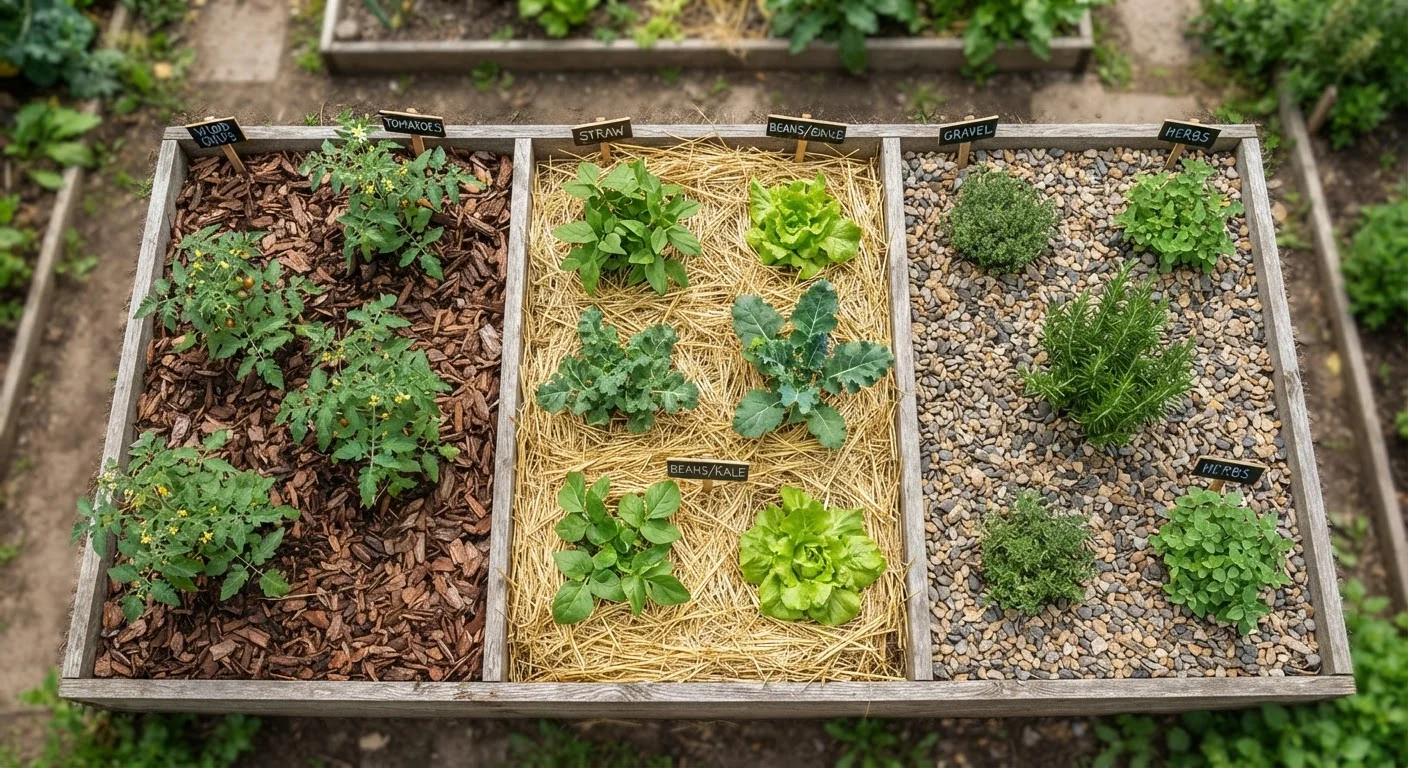
Photo: InsightsBlock.com | Access Information With Ease editorial
Key Takeaways
- Organic mulches like wood chips and straw improve soil health as they decompose over time.
- Inorganic mulches such as gravel and landscape fabric require little maintenance but offer no soil nutrition.
- Depth matters: applying 2-4 inches of mulch is generally effective for most garden beds.
- The right mulch depends on your garden type, climate, budget, and long-term maintenance goals.
- Mulching consistently suppresses weeds, retains moisture, and moderates soil temperature.
Why Mulch Matters in Any Garden Bed
Mulch is one of the most cost-effective tools a gardener has. A consistent layer across your beds slows water evaporation, buffers soil temperature, suppresses weed germination, and - depending on the material - can steadily improve the soil beneath it. The challenge is that the market offers dozens of materials, each with a different performance profile and price point.
Before comparing specific types, it helps to know the two broad categories: organic mulches (wood chips, straw, shredded leaves, grass clippings, compost) decompose over time and feed the soil. Inorganic mulches (gravel, crushed stone, landscape fabric, rubber chips) are largely permanent and focus on surface-level weed control and moisture retention without contributing organic matter. Both have legitimate uses - the question is which trade-offs fit your situation. If you're also managing soil fertility from the ground up, see our guide on composting at home for a complementary strategy.
Organic Mulch Options: What They Offer and What They Cost You
Wood chips and shredded bark are among the most widely available organic options. They break down slowly - often over two to four years - releasing nutrients gradually and improving soil structure. They're well-suited to ornamental shrubs, trees, and perennial beds. One important note: fresh wood chips placed directly against plant stems can introduce pathogens and may temporarily tie up nitrogen in the soil as they decompose. Keep chips a few inches away from crowns and stems.
Straw (not hay, which carries weed seeds) is a popular choice for vegetable gardens. It's lightweight, easy to apply, and breaks down within a single season - which means you'll reapply annually, but you also gain a quick organic matter boost. It can shift in wind, so it works best in sheltered beds.
Shredded leaves are a no-cost resource for many homeowners each fall. Run them through a mower or leaf shredder before applying - whole leaves can mat and block water infiltration. Leaf mulch is an excellent soil conditioner over time.
Grass clippings can work in thin layers (no more than 1-2 inches) but mat and smell when applied too thickly. They decompose quickly, which is useful in vegetable beds but means frequent reapplication.
Combine Mulch Types Strategically
Inorganic Mulch Options: Durability vs. Soil Health
Gravel, river rock, and crushed stone are extremely long-lasting and require almost no annual maintenance. They're excellent at holding soil in place on slopes, suppressing weeds in permanent landscape beds, and complementing drought-tolerant or native plant schemes. However, they absorb and radiate heat - which can stress plants in hot climates - and they offer zero nutritional benefit to the soil. Removing them if you change your planting plan is labor-intensive.
Landscape fabric is often marketed as a weed barrier, but its real-world performance is mixed. Over time, organic debris accumulates on top, weeds root into the fabric itself, and the material degrades, making removal difficult. It also limits the natural movement of beneficial organisms between surface and soil. Many experienced gardeners find it more trouble than it's worth in planted beds, though it can be useful under gravel or stone in purely decorative areas.
Rubber mulch, often made from recycled tires, is durable and doesn't decompose. It's sometimes used in playgrounds. In garden beds, concerns have been raised about heat retention and potential leaching of compounds over time; research on long-term soil impact is still evolving, so it's worth evaluating cautiously in food-growing areas.
| Wood Chips | Straw | Shredded Leaves | Gravel / Stone | Landscape Fabric | |
|---|---|---|---|---|---|
| Soil Improvement | High (slow release) | Medium (seasonal) | High (fast breakdown) | None | None |
| Weed Suppression | Good | Good | Moderate | Good | Moderate over time |
| Moisture Retention | Excellent | Good | Good | Moderate | Moderate |
| Longevity | 2-4 years | 1 season | 1 season | Permanent | 3-5 years (degrades) |
| Typical Cost | Low-Medium | Low | Free (DIY) | Medium-High | Low-Medium |
| Best Use Case | Perennials, trees | Vegetable beds | All beds | Pathways, slopes | Under stone only |
Application Tips and Common Mistakes to Avoid
Regardless of which mulch you choose, a few application principles apply broadly. Aim for a depth of 2-4 inches - thin layers don't suppress weeds effectively, while layers deeper than 4 inches can reduce oxygen flow to roots and create habitat for pests. Always pull back mulch from direct contact with plant stems, tree trunks, and crown areas to prevent rot and disease.
For new beds, remove existing weeds before mulching rather than relying on mulch alone to smother them - established perennial weeds will push through most materials. Water the bed before applying mulch if conditions are dry, since mulch can slow moisture from reaching the soil if it forms a dry crust on top.
If you're working with raised garden beds, keep in mind that they dry out faster than in-ground beds, making moisture-retaining organic mulches especially valuable. For gardens using native plants, inorganic options like gravel can complement the low-maintenance ethos - just verify the heat tolerance of your specific plant selections.
Avoid 'Mulch Volcanoes' Around Trees
The content provided on our blog site traverses numerous categories, offering readers valuable and practical information. Readers can use the editorial team’s research and data to gain more insights into their topics of interest. However, they are requested not to treat the articles as conclusive. The website team cannot be held responsible for differences in data or inaccuracies found across other platforms. Please also note that the site might also miss out on various schemes and offers available that the readers may find more beneficial than the ones we cover.