
Native Plants for Low-Maintenance Landscaping

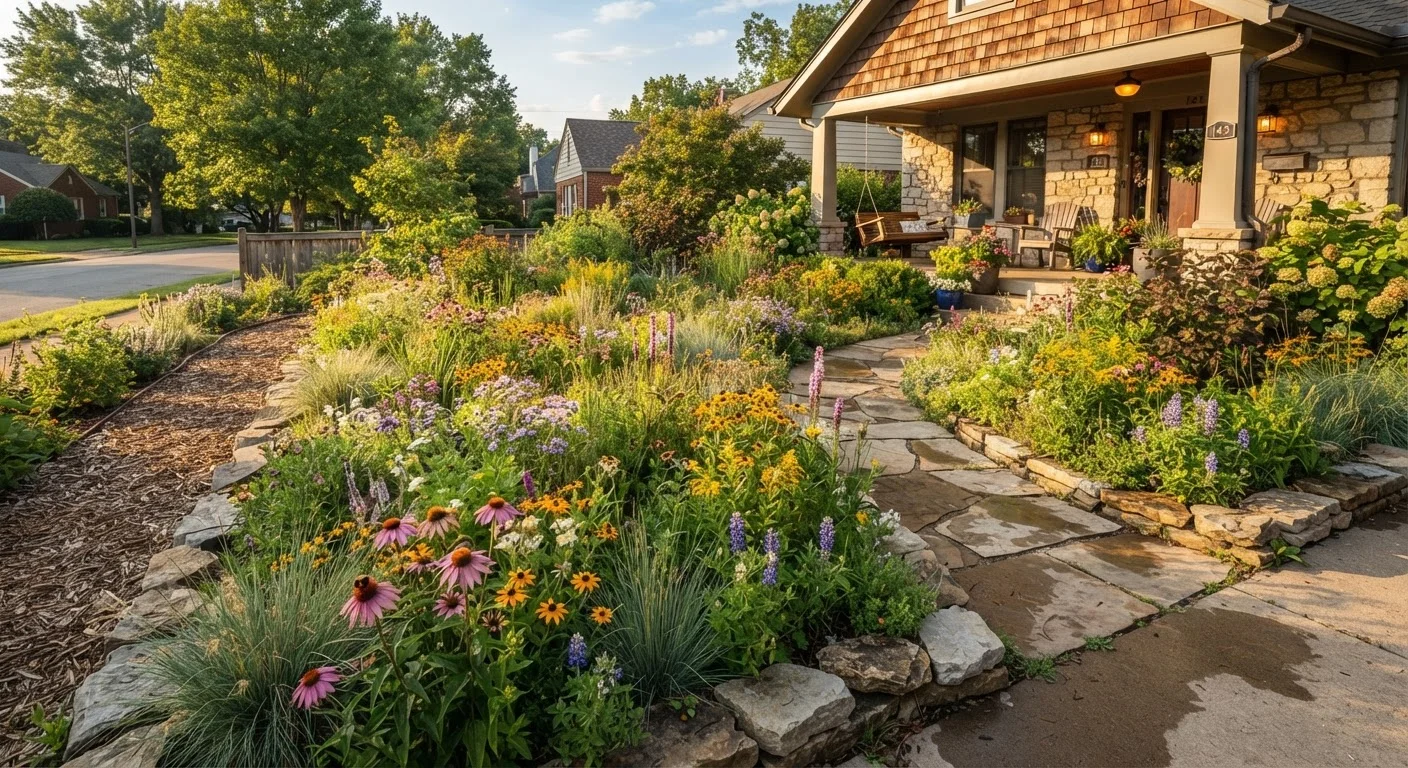
Photo: InsightsBlock.com | Access Information With Ease editorial
Key Takeaways
- Native plants are adapted to local climate and soil, reducing the need for supplemental watering and fertilizer.
- Grouping plants by water needs-called hydrozoning-maximizes efficiency and minimizes maintenance effort.
- Native groundcovers and shrubs can reduce or eliminate the need to mow large lawn areas.
- Pollinators and beneficial insects are supported by native plantings, improving overall garden health.
- Establishing natives takes patience; the first one to two seasons often require more attention than maturity.
Why Native Plants Make Practical Sense
Native plants - species that naturally occur in a specific region without human introduction - have evolved alongside local soils, rainfall patterns, and wildlife over thousands of years. That evolutionary history is your biggest asset as a homeowner. Once established, most natives require far less supplemental water, fertilizer, and pest management than non-native ornamentals.
That said, "low maintenance" doesn't mean "no maintenance." The establishment phase - typically the first growing season or two - still requires consistent watering and some weeding. The payoff comes later, when a well-chosen native planting largely looks after itself. This article walks through eight practical strategies for incorporating natives into your yard, whether you're starting from scratch or working with an existing landscape. For a broader seasonal framework, see the Year-Round Lawn and Garden Care playbook.
Give natives time to establish
Eight Ways to Work Native Plants Into Your Landscape
Match plants to your specific region and microclimate
"Native" is not a single category - a plant native to the Pacific Northwest may struggle in the Southeast, and vice versa. Before selecting any species, identify your USDA Plant Hardiness Zone and, if possible, your specific ecoregion. Your local Cooperative Extension office or a native plant society can provide region-specific recommendations. Beyond zone, observe your yard's microclimates: which spots stay wet after rain, which dry out quickly, and where shade falls throughout the day. Matching plants to these conditions is the foundation of genuinely low-maintenance gardening.
Matching a plant's natural habitat to your yard's conditions is the single highest-leverage choice you can make.
Start with native groundcovers to reduce lawn area
Conventional turf grass requires regular mowing, watering, and often chemical inputs to stay presentable. Replacing sections of lawn with native groundcovers - such as wild ginger, creeping phlox, or buffalo grass depending on your region - can dramatically cut maintenance time. These low-growing plants spread to cover bare soil, suppress weeds, and typically need little or no mowing. Even replacing 20-30% of a turf lawn with groundcover can produce a noticeable reduction in upkeep. Transition gradually by removing sod in defined areas rather than attempting a whole-yard conversion at once.
Replacing even 20-30% of turf with native groundcover can meaningfully reduce weekly maintenance demands.
Group plants by water needs (hydrozoning)
Hydrozoning means arranging plants with similar moisture requirements together so you can irrigate efficiently - or, ideally, not irrigate at all once plants are established. Place drought-tolerant natives on sunny, well-drained slopes and moisture-loving species near downspouts or low areas where water naturally collects. This approach avoids the common problem of overwatering drought-adapted plants while underwatering thirsty ones. It also simplifies any supplemental irrigation system you may have, since zones can be set to match plant needs rather than covering the yard uniformly.
Hydrozoning lets your irrigation match plant biology rather than forcing plants to adapt to uniform watering.
Choose native shrubs as low-effort structural anchors
Native shrubs provide year-round structure, seasonal interest, and habitat for birds and pollinators with minimal pruning demands. Many - such as native viburnums, buttonbush, or native hollies - are adapted to a range of soil conditions and require little intervention after the establishment period. Unlike formal hedges that demand repeated shearing, native shrubs can be allowed to grow into their natural form, which often looks intentional rather than neglected. A few well-placed shrubs can anchor a planting bed and reduce the open soil that weeds colonize.
Native shrubs grown in their natural form require far less pruning than formal, non-native hedging plants.
Use native grasses to replace high-maintenance ornamentals
Ornamental native grasses - such as little bluestem, switchgrass, or prairie dropseed - offer movement, texture, and winter interest with almost no supplemental care once established. They are generally drought-tolerant, rarely need fertilizing, and can be cut back once a year in early spring rather than repeatedly throughout the season. Native grasses also provide important cover and seed for birds during winter months. They work well as mass plantings, border edging, or focal points within a mixed native bed.
Most native grasses need only a single annual cutback and no fertilizer once they are well established.
Plant native wildflowers in drifts rather than rows
Native wildflowers planted in natural-looking drifts - irregular clusters rather than regimented rows - are more resilient and visually effective than isolated specimens. Drifts allow plants to self-seed and expand naturally over time, gradually filling gaps that weeds would otherwise occupy. They also create a more ecologically functional habitat for pollinators than scattered individual plants. Select a mix of species that bloom at different times to maintain color and interest from spring through fall, and allow spent seed heads to remain through winter for wildlife and self-seeding.
Drifts of native wildflowers self-seed and fill in over time, gradually reducing the space weeds can exploit.
Embrace leaf litter and natural mulch in planted areas
Fallen leaves from native trees are one of the most valuable - and free - resources in a native landscape. Rather than bagging and discarding them, allow leaves to remain in planting beds as natural mulch. They insulate plant roots, add organic matter to soil as they decompose, and provide overwintering habitat for many beneficial insects, including native bees that nest in leaf debris. Shredding leaves with a mower before moving them to beds speeds decomposition and prevents matting. In high-visibility front-yard areas, a thin layer of shredded wood chips over the leaves keeps things looking intentional. See also: comparing mulch types for garden beds.
Shredded leaf litter is free mulch that feeds soil, insulates roots, and supports beneficial overwintering insects.
Source plants from reputable local nurseries or plant sales
Not all plants marketed as "native" are true local ecotypes - some are cultivars bred for ornamental traits that may perform differently from wild-type plants in terms of hardiness or wildlife value. Whenever possible, source plants from nurseries that specialize in regional natives or from native plant society sales, where plants are often grown from locally collected seed. Local-ecotype plants are generally better adapted to your specific region's conditions, which translates directly into easier establishment and better long-term performance.
Local-ecotype natives sourced from regional nurseries typically establish faster and perform more reliably than generic cultivars.
Check local regulations before removing turf
Building a Yard That Works With Nature
Transitioning to a native-heavy landscape is a gradual process, and small changes compound over time. Start with one bed or one problem area - a dry slope, a soggy corner, or a patch of lawn that never looks quite right - and let native species show you what they can do. As you reduce the footprint of thirsty turf and high-maintenance ornamentals, you'll likely find that your yard demands less of your time without sacrificing curb appeal.
Pair your planting strategy with smart supporting habits. Mulching native beds conserves moisture and suppresses weeds during establishment - the guide to organic vs. inorganic mulch options can help you choose the right material. And if you're still maintaining any conventional turf alongside your natives, watering timing matters as much as volume - a principle that applies equally to native plantings during their first season.
The content provided on our blog site traverses numerous categories, offering readers valuable and practical information. Readers can use the editorial team’s research and data to gain more insights into their topics of interest. However, they are requested not to treat the articles as conclusive. The website team cannot be held responsible for differences in data or inaccuracies found across other platforms. Please also note that the site might also miss out on various schemes and offers available that the readers may find more beneficial than the ones we cover.