
Why Your Grass Is Thinning in Patches (And What's Behind It)

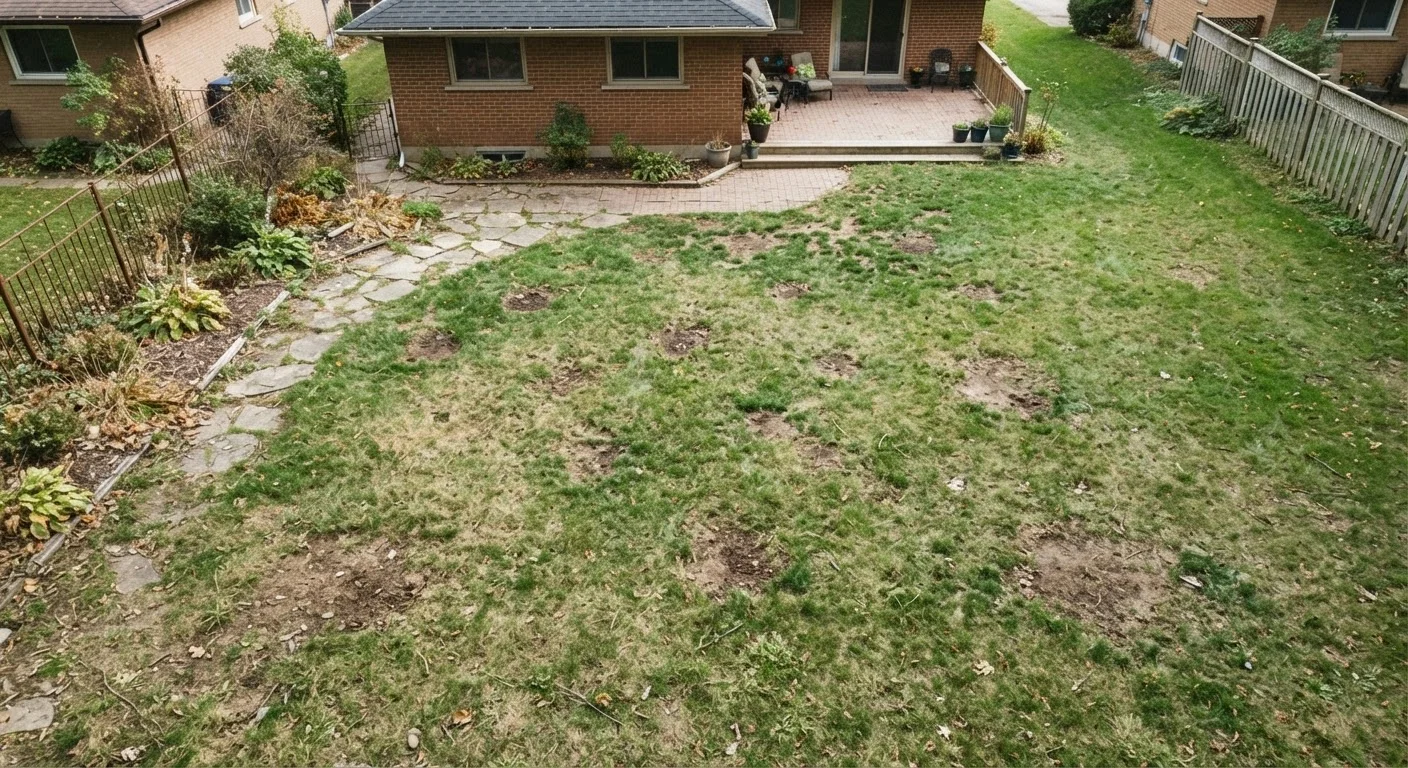
Photo: InsightsBlock.com | Access Information With Ease editorial
Key Takeaways
- Patchy grass almost always has an identifiable root cause - diagnosis before treatment saves time and money.
- Soil compaction, shade, pests, disease, and watering errors each produce distinct thinning patterns.
- Reseeding over an unresolved problem rarely produces lasting results.
- Matching your grass species to your climate and soil conditions is foundational to a healthy lawn.
Reading Your Lawn Before You React
A thinning lawn can be frustrating, especially when scattered patches appear seemingly overnight. But patchy grass is almost never random - the shape, location, and texture of the affected areas all carry diagnostic clues that point to a specific underlying problem.
Before spreading seed, fertilizer, or any treatment, take time to observe. Are the patches circular or irregular? Do they follow a drainage pattern, a shady area, or a high-traffic path? Is the grass yellowing before it thins, or does it simply disappear? Answering these questions narrows the field of likely causes considerably.
This article focuses on the mistakes homeowners most commonly make when dealing with patchy grass - specifically, the habit of reaching for solutions before understanding the problem. Each error below has a distinct pattern, a reason it happens, and a practical path to correction.
Reseeding bare patches without addressing the underlying cause.
Assuming all patchy areas have the same cause and applying a single treatment across the lawn.
Ignoring soil compaction as a cause of thinning, especially in high-traffic zones.
Misidentifying pest or disease damage as a watering problem and adjusting irrigation instead.
Mowing too short in an attempt to make the lawn look neater, weakening grass in the process.
Applying fertilizer as a first response to thinning without testing soil nutrient levels.
Why Diagnosing First Always Wins
The most expensive lawn care mistake is repeated treatment without a confirmed diagnosis. Overseeding compacted soil, for example, produces seedlings that die within weeks because roots cannot penetrate. Applying fungicide to a pest-damaged lawn wastes money and may harm beneficial soil organisms without addressing the grubs or insects doing the actual damage.
~40%
Lawn problems linked to soil compaction
Turf management research consistently identifies soil compaction as one of the most prevalent contributors to poor lawn health in residential settings.
3-4 inches
Optimal mowing height for cool-season grasses
University extension programs widely recommend maintaining cool-season grass at this height to support root depth and drought resistance.
Soil health is especially worth investigating early. A simple soil test - available through many cooperative extension services for a modest fee - reveals pH imbalances, nutrient deficiencies, and organic matter levels that influence grass density far more than any topical product. If your soil pH is significantly off, grass will struggle regardless of how carefully you water or fertilize. For guidance on when and how often to water once your soil issues are addressed, see our article on lawn watering schedules.
It also helps to know what type of grass you're working with. Cool-season grasses like tall fescue and Kentucky bluegrass behave very differently from warm-season varieties like Bermuda or Zoysia - and they thin for different reasons at different times of year. Our guide to cool-season vs. warm-season grasses can help you confirm what you're growing and what it needs.
Once you've identified the true cause, corrective action becomes straightforward - and if fall is approaching, there's no better time to act. Our fall lawn prep checklist outlines the aeration, overseeding, and soil amendment steps that pay dividends the following spring.
Don't Apply Pesticides Without Confirming Pests
The content provided on our blog site traverses numerous categories, offering readers valuable and practical information. Readers can use the editorial team’s research and data to gain more insights into their topics of interest. However, they are requested not to treat the articles as conclusive. The website team cannot be held responsible for differences in data or inaccuracies found across other platforms. Please also note that the site might also miss out on various schemes and offers available that the readers may find more beneficial than the ones we cover.