
Dry Food vs. Wet Food for Dogs

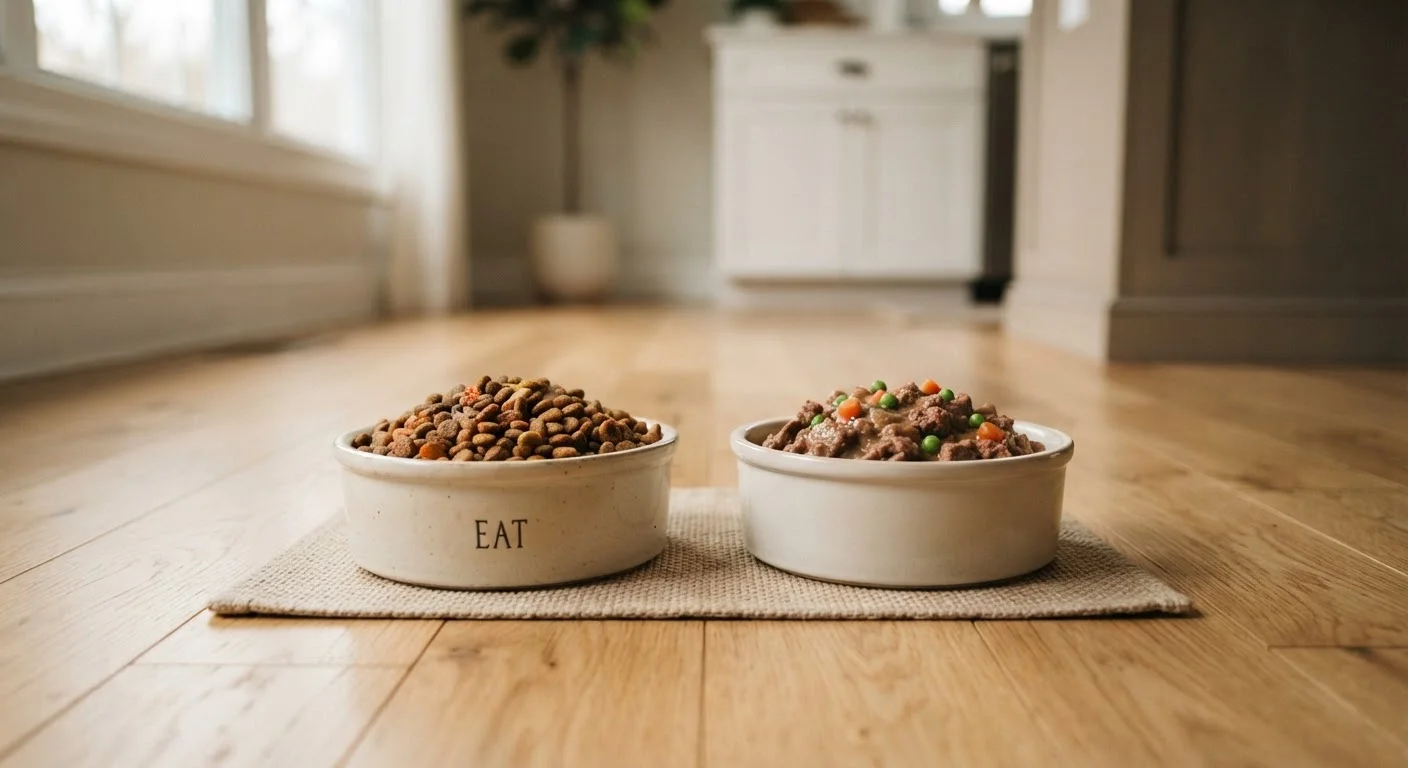
Photo: InsightsBlock.com | Access Information With Ease editorial
Key Takeaways
- Dry food is more cost-effective and shelf-stable, making it easier for daily feeding routines.
- Wet food provides significantly more moisture, which supports hydration especially in low-water drinkers.
- Neither format is universally superior - the right choice depends on your individual dog's health needs.
- Mixing wet and dry food is a valid approach that many veterinarians support.
- Always check AAFCO nutritional adequacy statements on any food you choose, regardless of format.
How Dry and Wet Dog Food Actually Differ
Dry kibble and canned wet food start from similar raw ingredients - meat, grains or vegetables, vitamins, and minerals - but the manufacturing process creates meaningful differences in moisture content, calorie density, and texture. Kibble is cooked at high temperatures and extruded into pellets, leaving a moisture content of around 10%. Canned food is processed at lower temperatures and sealed with a high water content, typically ranging from 70% to 80%.
That water difference has a ripple effect on almost every practical consideration: cost per calorie, serving size, storage, palatability, and how the food interacts with your dog's digestive system. Understanding these differences - rather than assuming one format is always better - puts you in a far stronger position to feed your dog well.
For a deeper look at how to interpret what's actually printed on your dog's food packaging, see what dog food labels are actually telling you.
| Criterion | Dry Food (Kibble) | Wet Food (Canned) |
|---|---|---|
| Moisture content | ~10% | 70-80% |
| Cost per serving | Lower | Higher |
| Shelf life (unopened) | 12-18 months | 2-5 years |
| Storage after opening | Sealed container, room temp | Refrigerated, 1-2 days |
| Calorie density | Higher per ounce | Lower per ounce |
| Dental abrasion benefit | Modest, format-dependent | Minimal |
| Palatability for picky eaters | Variable | Generally higher |
| Suitable for dogs with dental pain | Less suitable | Well suited |
Nutrition, Hydration, and Dental Health
From a nutritional standpoint, both formats can meet a dog's complete dietary needs when formulated to AAFCO standards. The key is checking the nutritional adequacy statement on the label, not assuming format equals quality. Calorie density matters too: wet food is more filling by volume but contains fewer calories per ounce, which can be useful for weight management but means larger serving quantities.
Hydration is where wet food holds a genuine edge. Dogs that eat primarily kibble obtain most of their water from their bowl - and some dogs, particularly smaller breeds or those with kidney concerns, simply don't drink enough. Wet food passively increases fluid intake without requiring behavioral change. This is one reason many veterinarians suggest wet food or mixed feeding for dogs prone to urinary tract issues.
Dental health is more nuanced. Dry kibble is often cited as better for teeth because chewing the hard pellets creates mild mechanical abrasion. There is some evidence to support this, though the effect is modest and applies mainly to specific dental-formula foods. Wet food, being soft, does not provide this abrasion and may leave more residue on tooth surfaces. However, the most effective dental care for any dog remains daily brushing - no food format replaces it. Learn more about what actually prevents dental disease in dogs.
70-80%
Moisture content in wet dog food
Compared to approximately 10% in dry kibble, making wet food a meaningful passive hydration source for dogs.
~80%
Dogs with dental disease by age 3
According to the American Veterinary Medical Association, dental disease is one of the most common health problems in adult dogs.
3-4x
Typical cost difference per calorie
Wet food generally costs significantly more per calorie delivered than dry kibble, though this varies by brand and formulation.
Cost, Convenience, and the Case for Mixing
On a per-serving basis, dry food is consistently less expensive than wet food. A medium-sized dog eating kibble exclusively will typically cost less to feed per month than one on an all-wet diet. Dry food also stores without refrigeration and has a long shelf life, making it practical for households that buy in bulk or travel with their dogs.
Wet food, once opened, must be refrigerated and used within a day or two, which can create waste if not managed carefully. It also takes up considerably more storage space per calorie delivered.
That said, a mixed feeding approach - using dry food as the base and adding wet food as a topper - is widely used and generally well-supported by veterinarians. It can improve palatability for picky eaters, boost moisture intake, and provide variety without the full cost of an all-wet diet. When mixing, adjust portion sizes to avoid overfeeding; both foods contribute calories.
Dogs with specific health needs - including seniors, those recovering from illness, or those with dental disease - may benefit from food format adjustments over time. Senior dogs in particular often require a reassessment of their diet as their chewing ability and digestive needs change.
If you've encountered strong claims about one format being categorically superior - for example, that dry food is always better for teeth, or that wet food is always more natural - it's worth reading common dog nutrition myths that vets still encounter before making your decision.
This article is for general informational purposes only and is not a substitute for personalized veterinary advice. Always consult your veterinarian before making significant changes to your dog's diet, particularly if your dog has a health condition.
The content provided on our blog site traverses numerous categories, offering readers valuable and practical information. Readers can use the editorial team’s research and data to gain more insights into their topics of interest. However, they are requested not to treat the articles as conclusive. The website team cannot be held responsible for differences in data or inaccuracies found across other platforms. Please also note that the site might also miss out on various schemes and offers available that the readers may find more beneficial than the ones we cover.