
What Your Dog's Food Label Is Actually Telling You

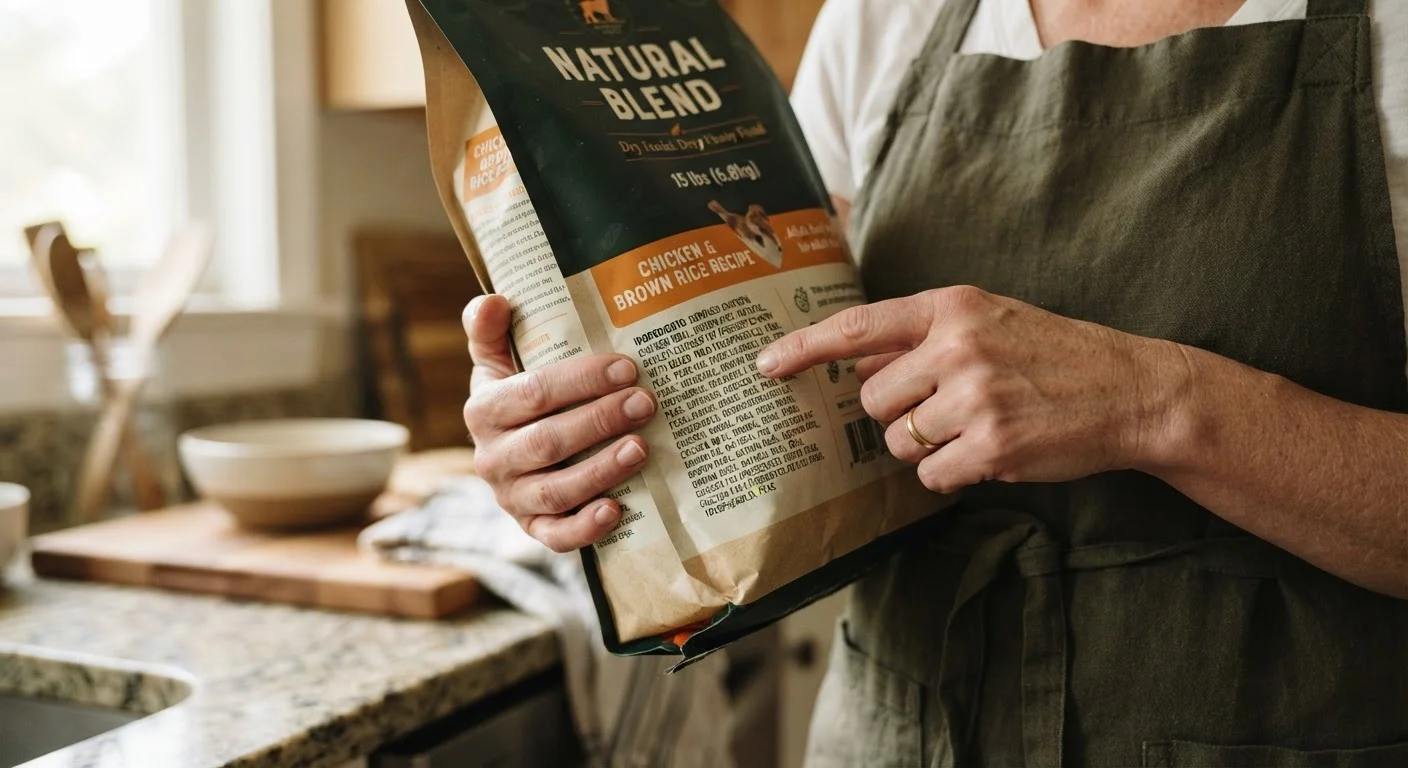
Photo: InsightsBlock.com | Access Information With Ease editorial
Key Takeaways
- The AAFCO nutritional adequacy statement tells you whether a food is complete and balanced for your dog's life stage.
- Ingredients are listed by weight before processing, so moisture content affects their position on the list.
- The guaranteed analysis shows minimum or maximum nutrient percentages, not exact amounts.
- "Meat meal" is a concentrated protein source and isn't necessarily inferior to whole meat listed first.
- Life stage labeling (puppy, adult, all life stages) reflects real differences in nutrient formulation.
- Your veterinarian is the best resource for matching a diet to your individual dog's health needs.
The AAFCO Statement: Start Here First
Before scanning ingredient lists, find the AAFCO nutritional adequacy statement. This small block of text - often on the back or side panel - tells you the most important thing about a dog food: whether it's formulated to be a complete diet.
A statement reading "formulated to meet the nutritional levels established by the AAFCO Dog Food Nutrient Profiles" means the manufacturer calculated nutrients to hit AAFCO minimums on paper. A statement that references feeding trials means the food was actually fed to dogs under AAFCO protocols and passed. Both are legitimate, but feeding trial claims reflect real-world testing.
Equally important: the life stage designation. A food approved for "growth" is suitable for puppies; "maintenance" is for healthy adults; "all life stages" covers puppies and adults. If there's no AAFCO statement at all, the product is not intended as a complete meal. See our guide to feeding senior dogs for how life stage needs evolve as your dog ages.
How to Actually Read the Ingredient List
Ingredients are listed in descending order by weight before processing. That detail matters. Fresh chicken contains roughly 70% water, so it weighs more before cooking than after. Once cooked, a food with chicken listed first may contain less chicken protein than one listing "chicken meal" - a pre-dried, concentrated source - lower on the list.
Key terms to understand:
- Named protein sources (chicken, beef, salmon) tell you the species. Unnamed sources ("meat," "poultry") are legal but less transparent.
- By-products are organ meats and other non-muscle parts. They are nutritious but vary in consistency - named by-products ("chicken by-products") are more regulated than unnamed ones.
- Splitting is a practice where manufacturers list one ingredient (say, corn) in multiple forms (corn flour, corn gluten meal) to push each lower individually, making the combined contribution less visible.
Ingredient lists won't tell you the exact quantity of each item - that information isn't required on labels. For a deeper look at how labeling compares across pet food formats, see our article on dry food vs. wet food for dogs.
95%
Minimum ingredient for single-named products
Under AAFCO naming rules, a product called "Chicken for Dogs" must be at least 95% chicken by weight, excluding water added in processing.
3%
Minimum required for "with" ingredient claims
AAFCO rules require only 3% of a named ingredient when the label uses the word "with," such as "Dog Food with Beef."
70%
Approximate water content in fresh meat
Fresh chicken and similar proteins are roughly 70% water before cooking, which affects their true contribution to a finished food relative to their position on the label.
The Guaranteed Analysis: What the Numbers Mean
The guaranteed analysis panel lists four required figures: minimum crude protein, minimum crude fat, maximum crude fiber, and maximum crude moisture. These are not exact nutrient measurements - they're regulatory thresholds that manufacturers must meet.
One important limitation: comparing a wet food to a dry food using label percentages is misleading. Wet food may show 10% protein while dry food shows 28%, but that's largely because wet food contains 75-80% moisture. To compare them fairly, calculate on a dry matter basis: divide the nutrient percentage by (100 minus the moisture percentage), then multiply by 100.
Converting to Dry Matter Basis
The guaranteed analysis won't tell you about amino acid profiles, vitamin sources, or the bioavailability of listed nutrients - areas where a veterinary nutritionist can provide more targeted guidance. For more on separating label reality from marketing, see our piece on common myths about dog nutrition.
Product Names Follow Strict Rules
The name on the front of the bag is more regulated than it might appear. AAFCO's naming rules set specific percentage thresholds that determine how an ingredient can be featured:
- 95% rule: "Chicken for Dogs" must contain at least 95% chicken (excluding water).
- 25% rule ("dinner," "entrée," "platter"): Terms like "Chicken Dinner" require only 25% of the named ingredient.
- 3% rule ("with"): "Dog Food with Beef" requires just 3% beef.
- "Flavor" rule: No minimum percentage required - only enough to be detectable.
This means "Salmon Flavor" and "Salmon Entrée" can represent dramatically different amounts of actual salmon. Front-of-pack marketing language is not a reliable guide to ingredient proportions. If you're also curious how these labeling conventions compare to those for cats, see reading a cat food label.
This article is for general informational purposes only and is not a substitute for personalized veterinary advice. Always consult a licensed veterinarian or board-certified veterinary nutritionist for guidance tailored to your dog's specific health needs.
Frequently Asked Questions
The content provided on our blog site traverses numerous categories, offering readers valuable and practical information. Readers can use the editorial team’s research and data to gain more insights into their topics of interest. However, they are requested not to treat the articles as conclusive. The website team cannot be held responsible for differences in data or inaccuracies found across other platforms. Please also note that the site might also miss out on various schemes and offers available that the readers may find more beneficial than the ones we cover.