
Raw Diet vs. Commercial Dog Food

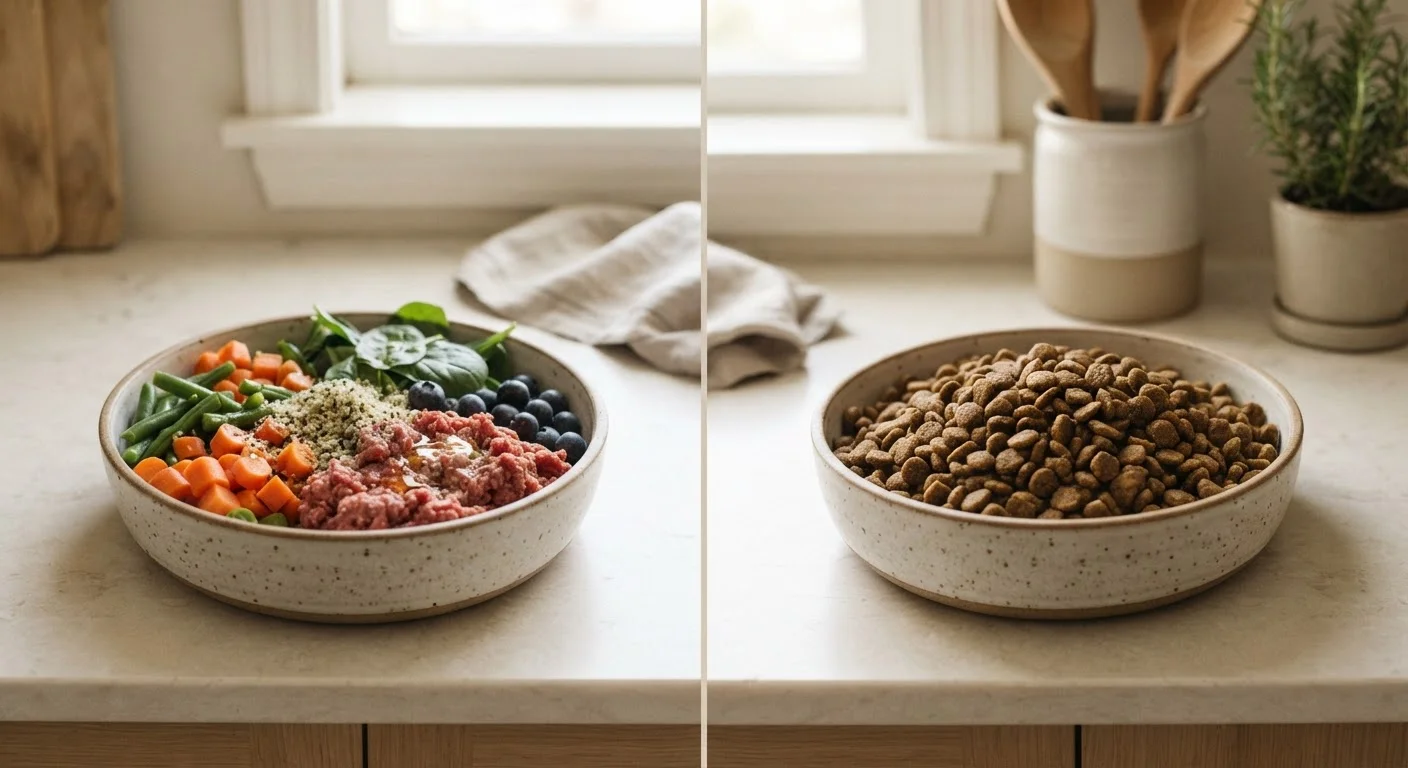
Photo: InsightsBlock.com | Access Information With Ease editorial
Key Takeaways
- Raw diets can offer high protein and minimal processing, but carry documented food safety risks.
- Commercial dog foods labeled 'complete and balanced' must meet AAFCO nutritional standards.
- Homemade raw diets are frequently nutritionally unbalanced without veterinary formulation guidance.
- Immunocompromised dogs, puppies, and households with young children face elevated risk from raw feeding.
- A veterinarian or board-certified veterinary nutritionist should guide any major diet change.
High protein content from whole animal sources
Raw diets typically deliver protein directly from muscle meat, which some proponents argue is more digestible than heat-processed protein. However, research comparing digestibility across diet types shows mixed results.
Minimal processing and no artificial additives
Unlike many kibble formulas, raw meals are not extruded at high temperatures and can be free of synthetic preservatives, artificial colors, and flavor enhancers-factors some owners prioritize.
Potential improvements in coat condition and stool volume
Some owners and vets report anecdotally that dogs on well-formulated raw diets show shinier coats and smaller stool output, though controlled studies confirming these effects remain limited.
Greater control over ingredients
Owners managing dogs with specific food sensitivities may find it easier to identify and eliminate trigger ingredients in a home-prepared raw diet compared to parsing commercial formulas.
Significant bacterial contamination risk
Raw meat can harbor Salmonella, Listeria, Campylobacter, and E. coli. Studies, including research published in veterinary journals, have consistently found these pathogens in commercially available raw pet food products, posing risk to both dogs and their human household members.
Nutritional imbalance is common in home-prepared diets
Multiple studies have found that the majority of home-formulated raw diet recipes-including those sourced online-do not meet established minimum nutritional requirements for dogs, leading to deficiencies in calcium, phosphorus, and key vitamins.
Bone-related injury hazard
Raw meaty bones, while sometimes included for dental stimulation, carry genuine risks of broken teeth, intestinal perforation, and obstruction-particularly if bones are weight-bearing or improperly sized for the dog.
Higher cost and preparation burden
Sourcing quality raw ingredients, storing them safely, and preparing balanced meals requires meaningful time, freezer space, and often a higher food budget compared to most commercial diets.
Elevated risk for vulnerable populations
Households with young children, elderly individuals, or immunocompromised people face heightened exposure risk from raw meat handling and from dogs who shed pathogens in their saliva and feces after eating raw food.
What 'Raw Diet' and 'Commercial Dog Food' Actually Mean
The term raw diet-sometimes called BARF (Biologically Appropriate Raw Food) or simply raw feeding-describes meals built around uncooked muscle meat, organ meat, raw meaty bones, and often fruits and vegetables. Some owners prepare these meals at home; others purchase commercially frozen or freeze-dried raw products.
Commercial dog food covers a wide spectrum: kibble (dry extruded food), canned wet food, semi-moist formulas, and commercially prepared raw or gently cooked options. What distinguishes most mainstream commercial diets is the AAFCO (Association of American Feed Control Officials) nutritional adequacy statement, which indicates the food has met defined nutrient profiles or passed feeding trials. For a deeper read on interpreting those labels, see what dog food labels are actually telling you.
Understanding both categories on their own terms is the necessary starting point before weighing trade-offs.
Pros of Raw Feeding
Advocates of raw feeding often point to benefits that deserve fair consideration-though many remain supported by owner observation rather than large-scale clinical trials.
High protein content from whole animal sources
Raw diets typically deliver protein directly from muscle meat, which some proponents argue is more digestible than heat-processed protein. However, research comparing digestibility across diet types shows mixed results.
Minimal processing and no artificial additives
Unlike many kibble formulas, raw meals are not extruded at high temperatures and can be free of synthetic preservatives, artificial colors, and flavor enhancers-factors some owners prioritize.
Potential improvements in coat condition and stool volume
Some owners and vets report anecdotally that dogs on well-formulated raw diets show shinier coats and smaller stool output, though controlled studies confirming these effects remain limited.
Greater control over ingredients
Owners managing dogs with specific food sensitivities may find it easier to identify and eliminate trigger ingredients in a home-prepared raw diet compared to parsing commercial formulas.
It's also worth noting that commercial raw products (frozen or freeze-dried) carry a different risk profile than homemade meals, since reputable manufacturers apply pathogen-reduction steps and some provide nutritional analysis.
Cons of Raw Feeding
The risks associated with raw diets are well-documented in peer-reviewed veterinary literature and are taken seriously by major veterinary organizations, including the American Veterinary Medical Association (AVMA).
Significant bacterial contamination risk
Raw meat can harbor Salmonella, Listeria, Campylobacter, and E. coli. Studies, including research published in veterinary journals, have consistently found these pathogens in commercially available raw pet food products, posing risk to both dogs and their human household members.
Nutritional imbalance is common in home-prepared diets
Multiple studies have found that the majority of home-formulated raw diet recipes-including those sourced online-do not meet established minimum nutritional requirements for dogs, leading to deficiencies in calcium, phosphorus, and key vitamins.
Bone-related injury hazard
Raw meaty bones, while sometimes included for dental stimulation, carry genuine risks of broken teeth, intestinal perforation, and obstruction-particularly if bones are weight-bearing or improperly sized for the dog.
Higher cost and preparation burden
Sourcing quality raw ingredients, storing them safely, and preparing balanced meals requires meaningful time, freezer space, and often a higher food budget compared to most commercial diets.
Elevated risk for vulnerable populations
Households with young children, elderly individuals, or immunocompromised people face heightened exposure risk from raw meat handling and from dogs who shed pathogens in their saliva and feces after eating raw food.
AVMA and Veterinary Organization Positions
If you're weighing raw feeding against other approaches, common myths about dog nutrition covers several widespread misconceptions-including the idea that dogs inherently thrive on raw meat-that are worth reading before deciding.
How Commercial Diets Compare
Commercial diets, particularly those carrying an AAFCO complete-and-balanced statement, offer a nutritional safety net that home-prepared raw meals rarely match without expert formulation. Decades of feeding research underpin most major commercial formulas, and quality control is an ongoing regulatory expectation rather than an owner-managed variable.
~74%
Home raw recipes failing nutrient requirements
A review of published raw diet recipes found roughly three-quarters did not meet minimum AAFCO or NRC nutritional guidelines for dogs, according to studies cited in veterinary nutrition literature.
21%-48%
Commercial raw products testing positive for pathogens
Multiple independent laboratory analyses of commercially sold raw dog food have found Salmonella or Listeria contamination rates in this range, according to findings reported in peer-reviewed veterinary journals.
That said, commercial food is not monolithic. Ingredient quality, processing methods, and protein sources vary considerably across the market. Dry food vs. wet food for dogs explores those distinctions further, particularly around hydration and dental health.
Feeding mistakes can occur with any diet. Common avoidable dog care errors outlines overfeeding and other well-meaning habits that can still cause harm, regardless of diet type.
Making a Safe, Informed Decision
There is no single diet that works optimally for every dog. Factors such as age, health status, activity level, and household composition all matter. Puppies, senior dogs, pregnant or nursing dogs, and dogs with compromised immune systems have heightened nutritional and safety needs that make raw feeding a higher-stakes choice.
If you're genuinely considering a raw diet, the most responsible path involves a consultation with your veterinarian or a board-certified veterinary nutritionist (DACVN) before transitioning. They can assess whether your dog is a reasonable candidate and help ensure the diet is nutritionally complete-something most home-formulated raw meals are not without professional input.
For context on how similar questions play out for other pets, raw diets vs. commercial cat food covers the same debate through a feline lens.
This article is for general informational purposes only and is not a substitute for personalized veterinary advice. Always consult a licensed veterinarian before making significant changes to your dog's diet.
The content provided on our blog site traverses numerous categories, offering readers valuable and practical information. Readers can use the editorial team’s research and data to gain more insights into their topics of interest. However, they are requested not to treat the articles as conclusive. The website team cannot be held responsible for differences in data or inaccuracies found across other platforms. Please also note that the site might also miss out on various schemes and offers available that the readers may find more beneficial than the ones we cover.