
Raw Diets vs. Commercial Cat Food: What the Research Actually Shows

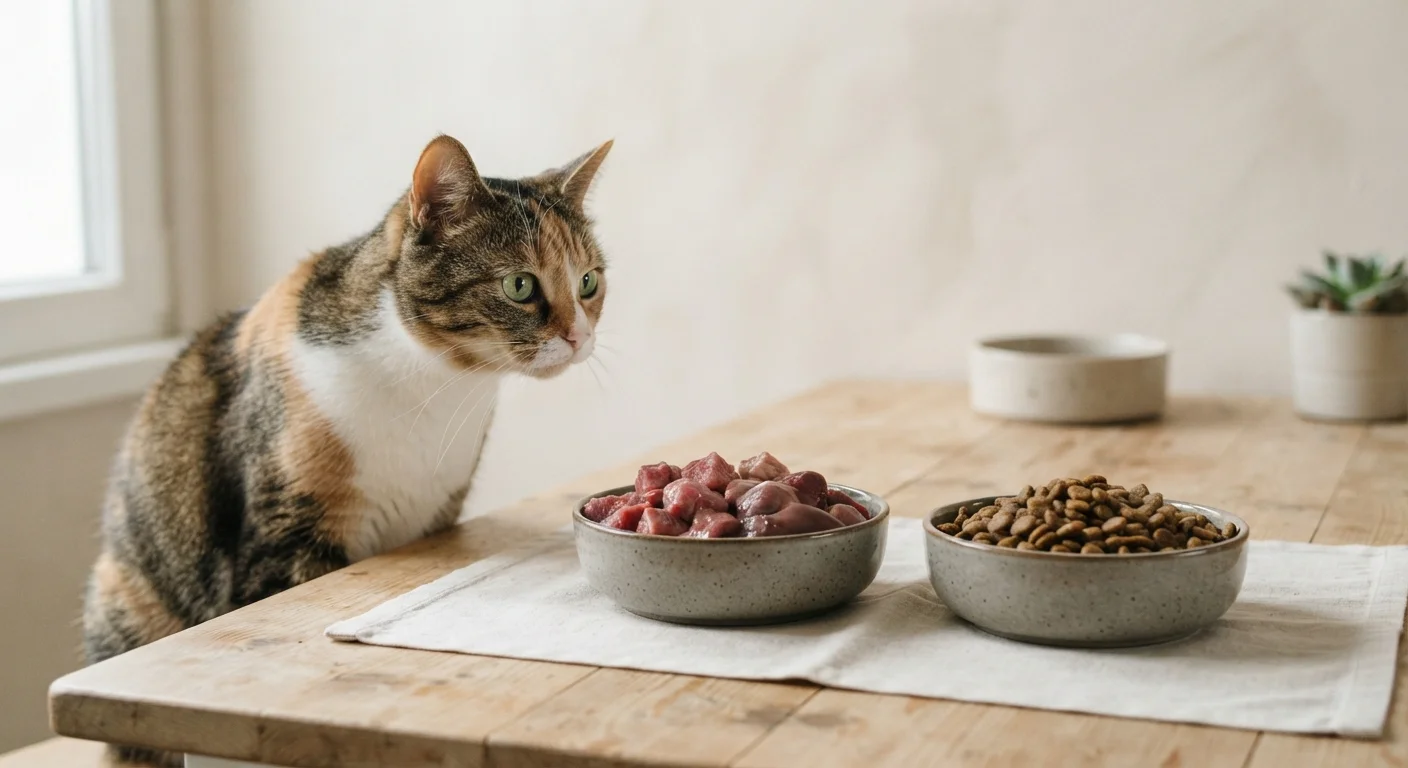
Photo: InsightsBlock.com | Access Information With Ease editorial
Key Takeaways
- Cats are obligate carnivores, meaning their nutritional needs differ significantly from dogs and humans.
- Raw diets carry documented risks of bacterial and parasitic contamination that can affect cats and their owners.
- Commercial diets formulated to AAFCO standards offer a more consistently verified nutritional baseline.
- Neither approach is universally superior - individual cat health, owner circumstances, and veterinary guidance all matter.
- A veterinarian or board-certified veterinary nutritionist is the most reliable guide for your cat's specific diet.
Why Cat Nutrition Is a Distinct Conversation
Cats are obligate carnivores - a biological designation meaning they require nutrients found almost exclusively in animal tissue. Unlike omnivores, cats cannot synthesize adequate amounts of taurine, arachidonic acid, vitamin A, or niacin from plant-based precursors. Any diet, raw or commercial, must account for these specific requirements to avoid serious health consequences over time.
This baseline matters when evaluating the raw-vs.-commercial debate, because proponents on both sides sometimes overlook it. The question is not simply whether a food is "natural" or highly processed - it's whether the diet reliably delivers what a cat's physiology actually demands. For a parallel look at how these questions play out with dogs, see our comparison of raw and commercial dog food.
What the Research Says About Raw Diets for Cats
Raw diets for cats typically consist of uncooked muscle meat, organ meat, and sometimes raw meaty bones - either home-prepared or purchased as commercially frozen raw products. Advocates argue that raw feeding more closely mirrors a cat's ancestral diet and may support coat health, digestion, and lean body condition.
The research picture is, however, more cautious than advocacy communities often suggest. Multiple studies and veterinary organizations - including the American Veterinary Medical Association (AVMA) and the American Animal Hospital Association (AAHA) - have flagged consistent concerns:
- Pathogen risk: Raw meat frequently harbors Salmonella, Listeria, E. coli, and Toxoplasma gondii. Studies have detected these pathogens in both commercial raw pet food products and home-prepared meals, posing risk to cats, other pets, and especially immunocompromised humans in the household.
- Nutritional imbalance: Home-prepared raw diets are frequently deficient in calcium, phosphorus, or key vitamins unless carefully formulated. A 2019 study published in the Journal of Nutritional Science found that a majority of raw diet recipes reviewed online were nutritionally incomplete by established feline standards.
- Inconsistent evidence for claimed benefits: Purported advantages such as improved digestion or shinier coats lack strong controlled study support in cats specifically.
| Raw Diet | Commercial Cat Food | |
|---|---|---|
| Nutritional completeness | Variable; home-prepared often incomplete | Consistent when AAFCO-compliant |
| Pathogen risk | Higher - Salmonella, Listeria, parasites documented | Lower - cooking and processing reduce pathogens |
| Veterinary evidence base | Limited; claimed benefits largely anecdotal | Stronger; AAFCO feeding trials available |
| Preparation time and effort | High for home-prepared; moderate for frozen raw | Low - ready to serve |
| Cost | Often higher, especially home-prepared | Wide range; generally more affordable options exist |
| Suitability for health conditions | Risky without professional formulation | Prescription diets widely available |
This article provides general nutritional information and is not a substitute for veterinary advice. Consult your veterinarian before making significant changes to your cat's diet.
What the Research Says About Commercial Cat Food
Commercial cat foods that carry an AAFCO (Association of American Feed Control Officials) nutritional adequacy statement have been formulated - and in some cases feeding-trial tested - to meet established feline nutrient profiles. This offers a meaningful verification layer that home-prepared raw diets typically lack.
That said, not all commercial foods are equal. Understanding label claims is essential; the guide to reading cat food labels breaks down what AAFCO statements, ingredient lists, and guaranteed analysis panels actually tell you. Wet versus dry formulations also differ meaningfully in hydration and caloric density - explored in detail in our wet vs. dry food comparison.
Check for the AAFCO Statement
Commercial ultra-processed foods are not without scrutiny. Concerns about carbohydrate levels, ingredient sourcing, and palatability additives are legitimate discussion points - though current evidence does not support conclusions that properly formulated commercial diets cause systematic harm in healthy cats.
Key Practical Considerations for Cat Owners
Beyond the nutritional science, several practical factors shape which approach is realistic for a given household:
- Food safety infrastructure: Raw diets require dedicated prep surfaces, careful thawing protocols, and heightened hygiene - especially critical in homes with young children, elderly individuals, or anyone with a compromised immune system.
- Cost and time: Nutritionally complete home-prepared raw diets are often more expensive and time-intensive than commercial options. Commercially prepared raw products vary widely in quality and cost.
- Veterinary access: Cats with kidney disease, hyperthyroidism, digestive disorders, or immune conditions often have specific dietary requirements that make unsupervised raw feeding higher risk. Always involve your veterinarian in dietary decisions for cats with known health conditions.
- Life stage: Kittens, pregnant cats, and senior cats have heightened nutritional demands and vulnerability to pathogens, making nutritional precision and food safety especially important.
For broader context on cat health decisions, our article on spaying and neutering illustrates how evidence-based veterinary guidance applies across major care choices.
The content provided on our blog site traverses numerous categories, offering readers valuable and practical information. Readers can use the editorial team’s research and data to gain more insights into their topics of interest. However, they are requested not to treat the articles as conclusive. The website team cannot be held responsible for differences in data or inaccuracies found across other platforms. Please also note that the site might also miss out on various schemes and offers available that the readers may find more beneficial than the ones we cover.