
Owning a Pet Rabbit: The Honest Trade-Offs

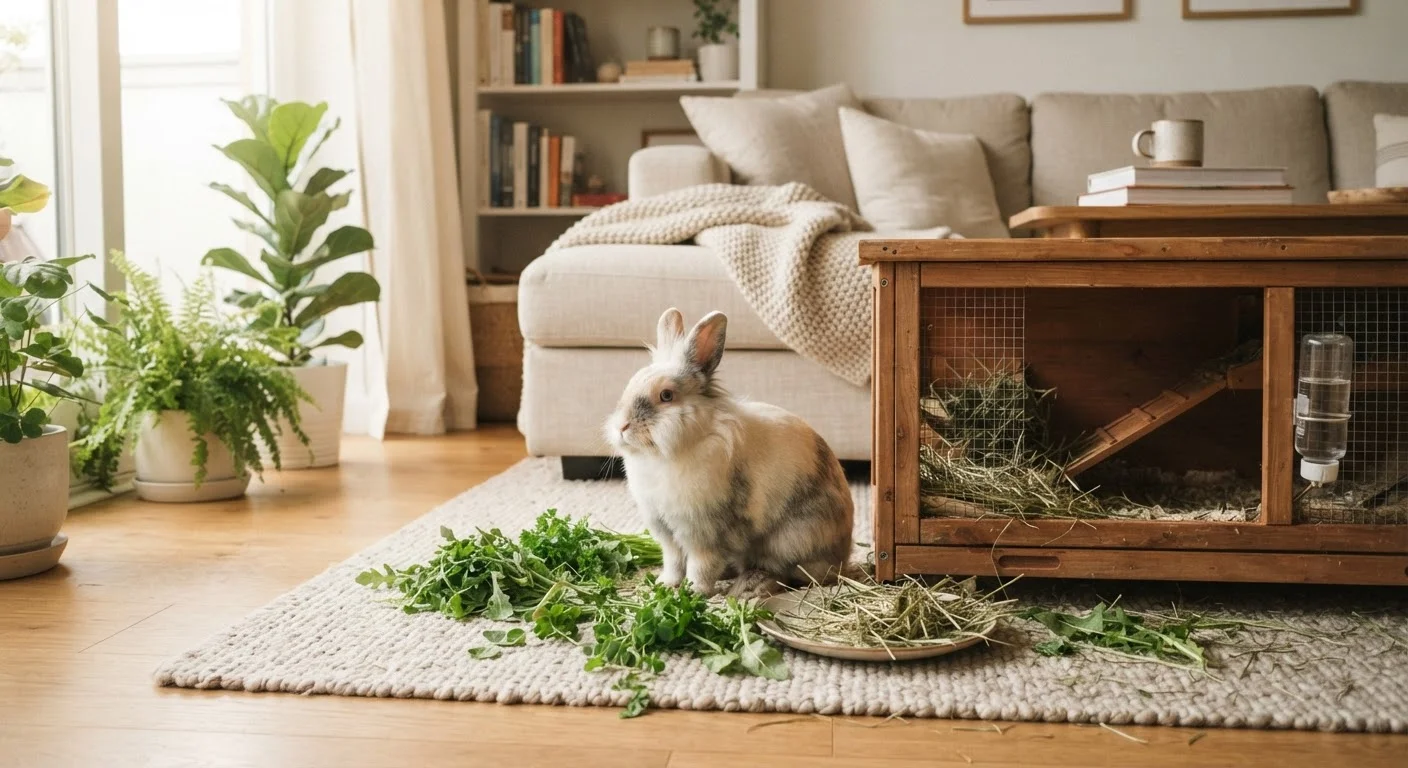
Photo: InsightsBlock.com | Access Information With Ease editorial
Key Takeaways
- Rabbits can live 8-12 years, making them a long-term commitment comparable to many dog breeds.
- They require daily free-roaming time outside a cage - a small hutch alone is not sufficient housing.
- Exotic-animal veterinary care for rabbits is a real and recurring cost that owners must plan for.
- Rabbits are social, intelligent animals that can become depressed without enough interaction or companionship.
- Their diet is mostly grass-based hay, and feeding the wrong foods can cause serious digestive problems.
- Despite the care demands, rabbits are affectionate and highly rewarding companions for the right household.
Quiet - suitable for apartments and shared housing
Rabbits do not bark or vocalize loudly, making them a practical choice for renters or those in close-proximity living situations where noise is a concern.
Highly expressive and capable of genuine bonding
Rabbits form strong attachments to their owners and communicate mood through a rich vocabulary of body language, making interactions feel genuinely reciprocal.
Litter-trainable with patience and consistency
Most rabbits can be successfully litter-trained, simplifying cleanup and allowing greater freedom to roam the home safely.
Long lifespan means a lasting companionship
At 8-12 years, rabbits offer a depth of relationship that many shorter-lived small pets cannot, rewarding owners who invest time in their care.
Active at dawn and dusk - aligns with many schedules
Their crepuscular activity pattern often means they are most playful exactly when working adults are home, making daily interaction more naturally sustainable.
Require significantly more space than perceived
Standard pet-store hutches are typically too small for a rabbit's needs. Adequate housing requires enough room to sprint, stand fully upright, and retreat to a private area.
Exotic-animal vet costs are higher than average
Because rabbits fall under exotic animal veterinary care, routine check-ups, dental work, and emergency treatment can be substantially more expensive than equivalent care for cats or dogs.
Prone to serious digestive emergencies
Gastrointestinal stasis - where the gut slows or stops - is a life-threatening condition in rabbits that can develop quickly and requires immediate veterinary attention.
Social needs are demanding and non-negotiable
A rabbit left alone for long periods without interaction or a bonded companion can develop behavioral problems and stress-related health issues.
Chewing instinct poses a household management challenge
Rabbits chew instinctively and indiscriminately - electrical cords, furniture, and baseboards all require protective measures before allowing a rabbit to roam freely.
Not well-suited to households with very young children
Rabbits startle easily and do not tolerate rough handling. The combination of a fragile skeletal structure and a stress-sensitive nature makes them a poor fit for toddlers or young children who cannot yet handle animals gently.
What Makes Rabbits Appealing Companions
Rabbits occupy a unique niche in the pet world: they are quiet enough for apartments, expressive enough to form real bonds with their owners, and fascinating to watch when given space to behave naturally. Unlike many small mammals, rabbits are active during dawn and dusk - which often aligns well with working adults' home schedules.
A content rabbit communicates in vivid, unmistakable ways. They flop dramatically onto their side when relaxed, launch into mid-air twists called binkies when joyful, and nudge you with their nose to request attention. Learning this body language is part of the pleasure of rabbit ownership. See our guide to rabbit body language for a full breakdown of what these signals mean.
Rabbits are also litter-trainable, naturally clean animals, and when spayed or neutered, they tend to be calmer and healthier overall.
Quiet - suitable for apartments and shared housing
Rabbits do not bark or vocalize loudly, making them a practical choice for renters or those in close-proximity living situations where noise is a concern.
Highly expressive and capable of genuine bonding
Rabbits form strong attachments to their owners and communicate mood through a rich vocabulary of body language, making interactions feel genuinely reciprocal.
Litter-trainable with patience and consistency
Most rabbits can be successfully litter-trained, simplifying cleanup and allowing greater freedom to roam the home safely.
Long lifespan means a lasting companionship
At 8-12 years, rabbits offer a depth of relationship that many shorter-lived small pets cannot, rewarding owners who invest time in their care.
Active at dawn and dusk - aligns with many schedules
Their crepuscular activity pattern often means they are most playful exactly when working adults are home, making daily interaction more naturally sustainable.
The Real Challenges of Rabbit Ownership
The most common reason rabbits are surrendered to shelters is unmet expectations. Many owners discover too late that rabbits are not hands-off pets. They need daily interaction, supervised out-of-cage time (ideally several hours), and a diet built almost entirely around grass hay - not the pellet-heavy or carrot-rich diet popular culture suggests. Our article on rabbit diet myths covers the most common and harmful feeding mistakes in detail.
Housing is another area where reality diverges from expectation. A small store-bought hutch is rarely adequate. Rabbits need horizontal space to sprint and vertical space to sit fully upright. Rabbits kept in cramped conditions are prone to skeletal problems, obesity, and behavioral issues.
Veterinary care is also a significant consideration. Rabbits are classified as exotic animals by most veterinary practices, meaning specialist consultations typically cost more than routine dog or cat appointments. Dental disease, gastrointestinal stasis, and respiratory infections all require prompt and sometimes expensive treatment.
Require significantly more space than perceived
Standard pet-store hutches are typically too small for a rabbit's needs. Adequate housing requires enough room to sprint, stand fully upright, and retreat to a private area.
Exotic-animal vet costs are higher than average
Because rabbits fall under exotic animal veterinary care, routine check-ups, dental work, and emergency treatment can be substantially more expensive than equivalent care for cats or dogs.
Prone to serious digestive emergencies
Gastrointestinal stasis - where the gut slows or stops - is a life-threatening condition in rabbits that can develop quickly and requires immediate veterinary attention.
Social needs are demanding and non-negotiable
A rabbit left alone for long periods without interaction or a bonded companion can develop behavioral problems and stress-related health issues.
Chewing instinct poses a household management challenge
Rabbits chew instinctively and indiscriminately - electrical cords, furniture, and baseboards all require protective measures before allowing a rabbit to roam freely.
Not well-suited to households with very young children
Rabbits startle easily and do not tolerate rough handling. The combination of a fragile skeletal structure and a stress-sensitive nature makes them a poor fit for toddlers or young children who cannot yet handle animals gently.
Lifespan and Long-Term Commitment
A healthy, well-cared-for rabbit can live between 8 and 12 years - a lifespan that surprises many first-time owners who assume small pets are short-lived. This is a decade-long relationship that will span life changes including moving home, having children, or changing work schedules. Our small pet lifespan guide puts this in context alongside other popular small pets.
Spaying and Neutering Is a Health Priority
Rabbits are also highly social animals. In the wild they live in groups, and a solitary house rabbit without sufficient human interaction - or ideally a bonded rabbit companion - can develop signs of depression and stress. This social need is not optional; it is a welfare requirement.
For families weighing different small pets, our complete small pet care reference offers a broader comparison of housing, diet, and health considerations across species.
8-12 years
Typical domestic rabbit lifespan
According to the House Rabbit Society, well-cared-for domestic rabbits commonly live 8 to 12 years, with some reaching their mid-teens.
~2-4 hours
Recommended daily out-of-cage exercise time
Veterinary and rabbit welfare organizations generally recommend a minimum of two to four hours of supervised free-roaming time daily for adult rabbits.
Is a Rabbit the Right Fit for Your Household?
Rabbits are not well-suited to every household. They can be easily startled by loud noise and sudden movements, which can make them a poor match for very young children who struggle to handle animals gently. Stress in rabbits is a genuine health risk - a frightened rabbit may injure itself trying to flee, or develop chronic conditions linked to ongoing anxiety.
They are also chewers by nature. Baseboards, electrical cords, and furniture are all at risk without proper rabbit-proofing. This is not misbehavior - it is a normal, instinctive activity - but it requires active management from owners.
On the other hand, households that can offer a safe, spacious environment with consistent daily care will find rabbits genuinely rewarding. They are intelligent enough to learn their name, to navigate puzzle feeders, and to develop clear preferences and routines. If you are considering alternative small pets, our comparison of gerbils vs. hamsters may also be helpful in evaluating what level of social interaction and space different species truly need.
The content provided on our blog site traverses numerous categories, offering readers valuable and practical information. Readers can use the editorial team’s research and data to gain more insights into their topics of interest. However, they are requested not to treat the articles as conclusive. The website team cannot be held responsible for differences in data or inaccuracies found across other platforms. Please also note that the site might also miss out on various schemes and offers available that the readers may find more beneficial than the ones we cover.