
Gerbils vs. Hamsters: Understanding the Real Differences Before You Adopt

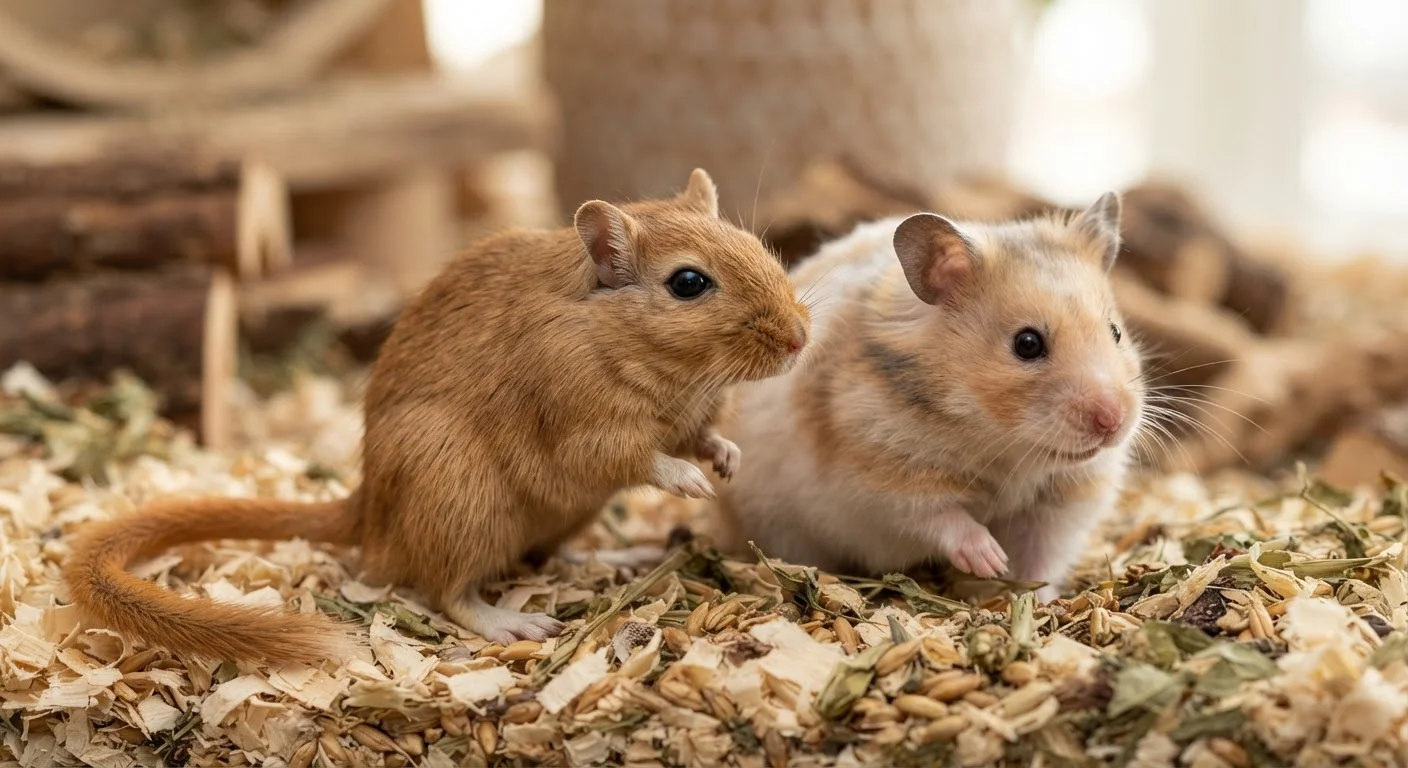
Photo: InsightsBlock.com | Access Information With Ease editorial
Key Takeaways
- Gerbils are social animals that generally do best when kept in same-sex pairs or small groups.
- Most hamster species are solitary and can become aggressive when housed with others.
- Gerbils are active during the day; hamsters are primarily nocturnal, peaking in activity at night.
- Gerbils typically live 3-5 years; most hamster species live 2-3 years on average.
- Hamsters are often easier for beginners to handle solo; gerbils require gentler, patient taming.
- Both species need species-appropriate enclosures, enrichment, and regular veterinary awareness.
Why People Confuse Them - and Why It Matters
Gerbils and hamsters are both small, furry, and sold side by side in many pet stores. That proximity leads many prospective owners to assume they're interchangeable. They are not. The differences in their social structure, activity cycles, and handling temperament are significant enough that choosing the wrong one - based on appearance alone - is one of the most common early mistakes in small pet ownership.
Understanding what each animal actually needs is the first step toward a positive experience for both owner and pet. See our guide to early hamster ownership mistakes for a closer look at how these misconceptions play out in practice.
| Criterion | Gerbil | Hamster |
|---|---|---|
| Social structure | Social - best kept in pairs | Solitary (most species) |
| Activity pattern | Diurnal/crepuscular (daytime active) | Nocturnal (night active) |
| Typical lifespan | 3-5 years | 2-3 years |
| Handling temperament | Curious but quick; needs patient taming | Often tolerant once tamed; dislikes daytime waking |
| Cage odor | Lower (less urine output) | More frequent cleaning needed |
| Minimum companions needed | Two (same-sex pair recommended) | One (Syrian must be alone) |
| Burrowing behaviour | Moderate - enjoys tunnels | Strong - requires deep bedding |
Social Needs: Paired vs. Solitary
This is arguably the most important difference between the two species. Gerbils are highly social animals. In the wild, they live in family groups, and in captivity, most gerbils benefit significantly from being housed with at least one same-sex companion. A lone gerbil can experience stress and reduced well-being. If you're adopting gerbils, plan for two - ideally a same-sex pair introduced when young.
Hamsters, by contrast, are solitary by nature. Syrian hamsters - the large, golden-colored variety most people picture - should always be housed alone. Dwarf hamster species (such as Roborovski and Campbell's dwarf hamsters) are sometimes kept in pairs, but even then, fighting can occur, and careful monitoring is necessary. Housing Syrian hamsters together almost always leads to injury or death for one animal.
A Note on Dwarf Hamster Species
For owners weighing other small mammals, our small pet lifespan reference guide provides a useful overview of what to expect across multiple species.
Activity Patterns, Handling, and Temperament
Gerbils are diurnal to crepuscular - active primarily during daylight and twilight hours. This makes them more compatible with a typical household schedule. They are naturally curious and will explore hands placed in their enclosure, though they are quick and agile, which can make them tricky for very young children to handle safely.
Hamsters are nocturnal. They sleep for much of the day and become active after dusk. Waking a hamster during the day to handle it causes genuine stress and can lead to biting. Owners who work daytime hours and expect evening interaction may find this schedule more compatible than they initially expect - but it does mean daytime handling is largely off the table.
In terms of taming, Syrian hamsters are generally considered somewhat easier to handle once acclimated. Gerbils tend to be more skittish initially, responding better to slow, patient approaches and in-enclosure interaction before being picked up. Neither species should be squeezed or restrained forcefully.
For readers also exploring other small pets, understanding the real demands of rabbit ownership offers a useful parallel perspective on setting realistic expectations.
Lifespan, Housing, and Health Considerations
Lifespan matters when making a commitment to any animal. Gerbils typically live 3-5 years, while most hamster species average 2-3 years. Roborovski dwarf hamsters may occasionally reach 3-3.5 years; Syrian hamsters often live 2-2.5 years. These are general ranges - individual animals vary, and genetics, diet, and care quality all play a role.
Both species need adequate enclosure space, appropriate bedding for burrowing, an appropriately sized solid-surface exercise wheel, and mental enrichment through tunnels and chew items. Gerbils produce less urine than hamsters and tend to have less cage odor, which some owners find a practical advantage.
From a health standpoint, both species are prone to species-specific conditions - dental issues, tumors, and respiratory infections among them. Locating an exotic or small mammal veterinarian before adoption is strongly recommended; standard dog-and-cat practices may not have experience treating rodents. This is general information only - consult a qualified veterinarian for health concerns specific to your animal.
For a broader look at small pet care across species, see our complete small pet owner's reference. If you're also considering birds, our comparison of canaries versus budgerigars applies the same practical framework to avian pets.
This article is for general informational purposes only and does not constitute veterinary advice. Always consult a qualified exotic animal veterinarian for health concerns related to your pet.
The content provided on our blog site traverses numerous categories, offering readers valuable and practical information. Readers can use the editorial team’s research and data to gain more insights into their topics of interest. However, they are requested not to treat the articles as conclusive. The website team cannot be held responsible for differences in data or inaccuracies found across other platforms. Please also note that the site might also miss out on various schemes and offers available that the readers may find more beneficial than the ones we cover.