
Eating Well Without Overspending: How Locals Really Eat Abroad

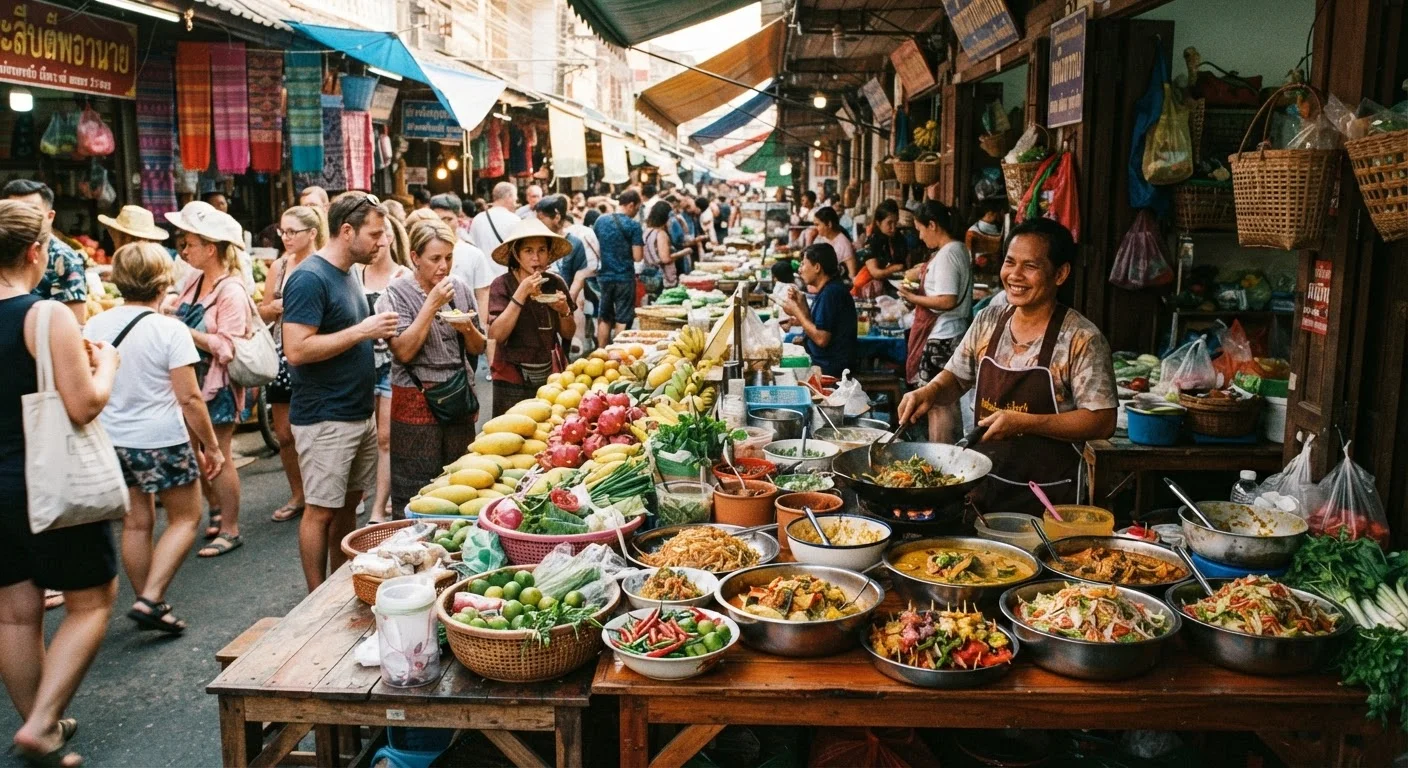
Photo: InsightsBlock.com | Access Information With Ease editorial
Key Takeaways
- Eating where locals eat - not where tourists are funneled - consistently delivers better food at lower prices.
- Lunch is typically the most affordable and filling meal of the day in many countries.
- Markets, bakeries, and food halls often provide genuine local cuisine at a fraction of restaurant costs.
- Understanding a destination's street food culture before you arrive helps you eat confidently and safely.
- Simple habits like avoiding prime tourist zones at mealtimes can meaningfully reduce daily food spending.
Why Tourist Menus Cost So Much More
Restaurants clustered around major landmarks and tourist squares operate on a different economic logic than neighborhood spots. They pay higher rents, turn tables quickly, and market aggressively to people who may never return - so they have little incentive to compete on value. Menus printed in six languages with photographs of every dish are a reliable signal that pricing has been calibrated for visitors, not locals.
The good news is that stepping just two or three blocks away from the main drag often drops prices noticeably - sometimes by 30-50% for equivalent food. That kind of savings adds up fast across a week-long trip. A thoughtful food strategy pairs well with a broader travel budget plan; see our guide to building a trip budget that actually holds for how to account for daily meals realistically.
Practical Strategies for Eating Like a Local
The following practices aren't about deprivation - they're about redirecting your spending toward food that is often more satisfying, more culturally meaningful, and genuinely easier on your wallet.
Markets deserve special attention. In much of Europe, Latin America, and Southeast Asia, covered municipal markets (often called mercados, halles, or wet markets) house prepared-food stalls alongside produce vendors. These are the spots where office workers and families eat lunch - not tourists. Prices reflect a local cost of living, portions tend to be generous, and the quality is frequently excellent. Pair a market visit with free and low-cost local experiences for a genuinely full and affordable day out.
Navigating Street Food and Food Safety
Street food is one of the most powerful tools a budget traveler has - but it requires a small amount of judgment. High turnover is your friend: a stall with a constant queue is restocking and cooking fresh constantly, which is a better safety indicator than a slow, quiet one. Look for vendors who handle money and food separately, and where possible, opt for cooked-to-order items rather than pre-plated dishes that have been sitting out.
Food Safety Abroad: A Sensible Perspective
Before traveling, spending 20-30 minutes reading about the specific street food culture of your destination pays dividends. Knowing that a particular city is celebrated for its market breakfasts, or that a region's roadside stalls are a point of local pride, gives you confidence to engage - and a framework for what to look for. If food spending is part of a tighter overall strategy, our guide to stretching a week abroad on a tight budget covers daily spending in more depth.
Making Smart Choices at Sit-Down Restaurants
Sometimes you want to sit down, take your time, and enjoy a full meal - and that's completely reasonable. The key is knowing how to read the room. In many countries, restaurants offer a fixed-price lunch menu (called a menú del día in Spain, a prix fixe in France, or a set lunch in much of Asia) that includes multiple courses at a price well below à la carte ordering. This is often the meal that restaurant regulars eat, and it's worth seeking out specifically.
Avoiding restaurants that station someone outside to hand you a flyer or call out to passersby is also a reliable heuristic - establishments confident in their food tend to let it speak for itself. Checking whether a restaurant accepts local payment methods rather than prominently advertising card readers for foreign currencies can also signal whether it's oriented toward locals or visitors. For payment strategy while abroad, our article on carrying cash vs. using cards abroad is worth reviewing before you go.
With a little curiosity and a willingness to wander slightly off the beaten path, eating well abroad doesn't have to mean spending heavily. The most memorable meals travelers describe are rarely from the restaurants with the best-positioned signs - they're from the places they stumbled into, trusting the crowd at the counter.
The content provided on our blog site traverses numerous categories, offering readers valuable and practical information. Readers can use the editorial team’s research and data to gain more insights into their topics of interest. However, they are requested not to treat the articles as conclusive. The website team cannot be held responsible for differences in data or inaccuracies found across other platforms. Please also note that the site might also miss out on various schemes and offers available that the readers may find more beneficial than the ones we cover.