
Gear That Earns Its Weight: Travel Accessories That Solve Real Problems

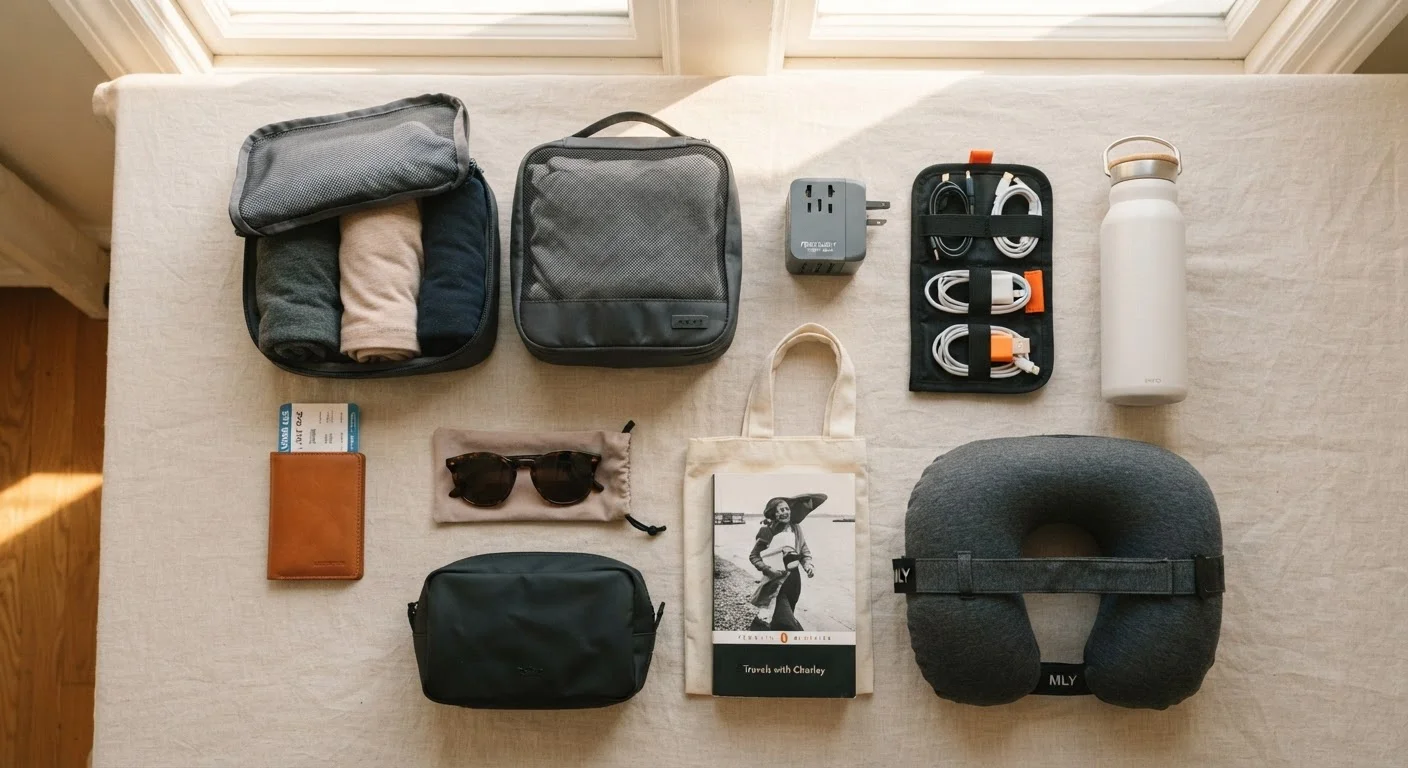
Photo: InsightsBlock.com | Access Information With Ease editorial
Key Takeaways
- The most useful travel accessories solve a specific, recurring problem - not a theoretical one.
- Weight and bulk matter: an accessory that never leaves the bag is dead weight, not a safety net.
- Packing cubes, power adapters, and a quality cable organizer consistently earn their place on almost every trip.
- Comfort and health accessories like a good neck pillow or earplugs pay dividends on long-haul flights.
- Multi-use items deliver more value per ounce than single-purpose gadgets.
Why Most Travel Gear Doesn't Make the Cut
Walk into any travel retailer and you'll find entire walls of gear promising to transform your trip. Most of it will sit at the bottom of your bag, untouched. The accessories that actually earn their spot aren't the flashiest ones - they're the ones that fix a problem you'd otherwise encounter on every single journey.
The filter we use is simple: does this solve a real, recurring problem, or does it just make packing feel more organized in theory? Gear that passes that test tends to be lightweight, versatile, and used constantly rather than stashed as insurance against unlikely scenarios. If you're still refining your overall approach, proven packing strategies from frequent travelers are worth reviewing before you start shopping for accessories at all.
Below are the categories of gear that consistently justify their presence - not as a shopping list, but as a framework for thinking about what genuinely helps.
Packing Cubes
Packing cubes are one of the rare accessories that genuinely change how you travel. By compartmentalizing clothing into labeled, compressible sections, they eliminate the morning rummage through a bag that's been opened and repacked a dozen times. They also make switching between accommodations dramatically faster - pull out the cube you need rather than unpacking everything.
Compression versions are useful for bulkier items like fleeces or jeans, though they don't reduce total volume as much as the marketing often implies. The real value is organization and speed, not compression. Even a basic set of three or four cubes in graduated sizes covers most packing configurations.
Packing cubes don't just organize - they cut repacking time at every stop.
A Universal Power Adapter with USB Ports
Plug shape incompatibility is one of travel's most preventable frustrations. A quality universal adapter that handles the major regional standards - Type A/B (North America), Type C (Europe), Type G (UK), and Type I (Australia) - covers the vast majority of international destinations. Look for one that includes built-in USB-A and USB-C ports so it doubles as a charging hub without requiring a separate power strip.
The key detail most travelers overlook: check the adapter's wattage rating. Under-powered adapters can damage devices or charge them too slowly to be practical. A unit rated for at least 65-100W handles most laptops comfortably alongside phones.
A multi-region adapter with USB ports eliminates the need for both an adapter and a charging hub.
A Cable and Electronics Organizer
The tangled knot of cables at the bottom of a bag is a near-universal travel annoyance. A small zippered electronics organizer - typically flat, with elastic loops and mesh pockets - keeps charging cables, earbuds, portable batteries, SD cards, and adapters in one retrievable place. It takes about thirty seconds to pack and saves several minutes of frustrated searching at airports and hotel desks.
Size matters here. A pouch that's too large becomes its own packing problem. Aim for something roughly the size of a hardcover novel that fits flat inside your carry-on or personal item.
A flat electronics organizer is one of the cheapest ways to end cable chaos for good.
Noise-Canceling Earbuds or Earplugs
Long flights, overnight buses, and thin-walled guesthouses all share one feature: noise. Active noise-canceling earbuds manage engine drone and low-frequency rumble particularly well, making sleep and concentration significantly easier on long-haul routes. They're an investment, but one that improves the quality of dozens of hours in transit over time.
For travelers who don't want the cost or the charging dependency, a set of high-quality foam earplugs rated at 30+ NRR (Noise Reduction Rating) occupies almost no space and handles the same problems in most non-flight scenarios. Many experienced travelers carry both.
Noise control is one of the most underrated variables in how rested you arrive.
A Packable, Quick-Dry Towel
Hotel towels are reliable. Hostel towels often aren't. Beach access, day hikes that end in a waterfall, and spontaneous swims all have one thing in common: you probably won't have a towel. Microfiber travel towels dry in roughly a quarter of the time conventional towels do, pack down to the size of a thick paperback, and weigh almost nothing.
A medium size - around 24 by 48 inches - covers most scenarios without the bulk of a full-sized version. It's one of those items that feels unnecessary until the exact moment you need it, which is usually when there's no alternative available.
A microfiber travel towel handles hostel gaps, spontaneous swims, and beach days with minimal pack space.
A Collapsible or Reusable Water Bottle
Staying hydrated in transit is genuinely easy to neglect, and single-use plastic purchases add up in both cost and waste. A collapsible silicone bottle folds flat when empty - useful if space is tight - while a lightweight insulated bottle keeps drinks cold or hot for hours, which matters more on a full day of sightseeing than it sounds.
The practical rule: pack a bottle you'll actually use, not the largest one that technically fits. A 20-oz bottle that's always in hand beats a 32-oz bottle that stays in the bag because it's inconvenient to carry.
A reusable bottle that fits your actual habits is worth more than the largest option that technically packs.
A Door Lock or Portable Security Device
This category is less about paranoia and more about peace of mind in unfamiliar accommodation. A simple rubber door wedge costs almost nothing, packs flat, and prevents a door from opening inward regardless of whether the lock is flimsy or the locking hardware is missing. It's particularly useful in budget guesthouses and remote lodges where security standards vary.
For lockers at hostels or shared spaces, a small combination padlock is similarly low-weight and high-utility. Neither item adds meaningful bulk, and together they cover the most common security gaps travelers encounter without going overboard on surveillance hardware.
A door wedge and small padlock address the most common accommodation security gaps for almost no weight.
Building a Kit That Works for You
The goal isn't to replicate someone else's perfectly curated kit - it's to identify the friction points in your own travel and find accessories that eliminate them. A solo backpacker moving between hostels has different needs than someone taking two-week resort vacations with checked luggage.
Test Your Kit Before You Travel
Before your next trip, try auditing what you actually reached for on your last one. Items you never touched are strong candidates for removal. This habit alone tends to shrink packs significantly over time - a theme explored in depth in our look at overpacking patterns most travelers miss until the return flight.
If you're considering going further - traveling with just one bag - it's also worth understanding the real tradeoffs of one-bag travel before committing. The right gear list looks very different depending on that choice.
The content provided on our blog site traverses numerous categories, offering readers valuable and practical information. Readers can use the editorial team’s research and data to gain more insights into their topics of interest. However, they are requested not to treat the articles as conclusive. The website team cannot be held responsible for differences in data or inaccuracies found across other platforms. Please also note that the site might also miss out on various schemes and offers available that the readers may find more beneficial than the ones we cover.