
Carry-On Only: What It Really Takes to Travel Without Checked Luggage

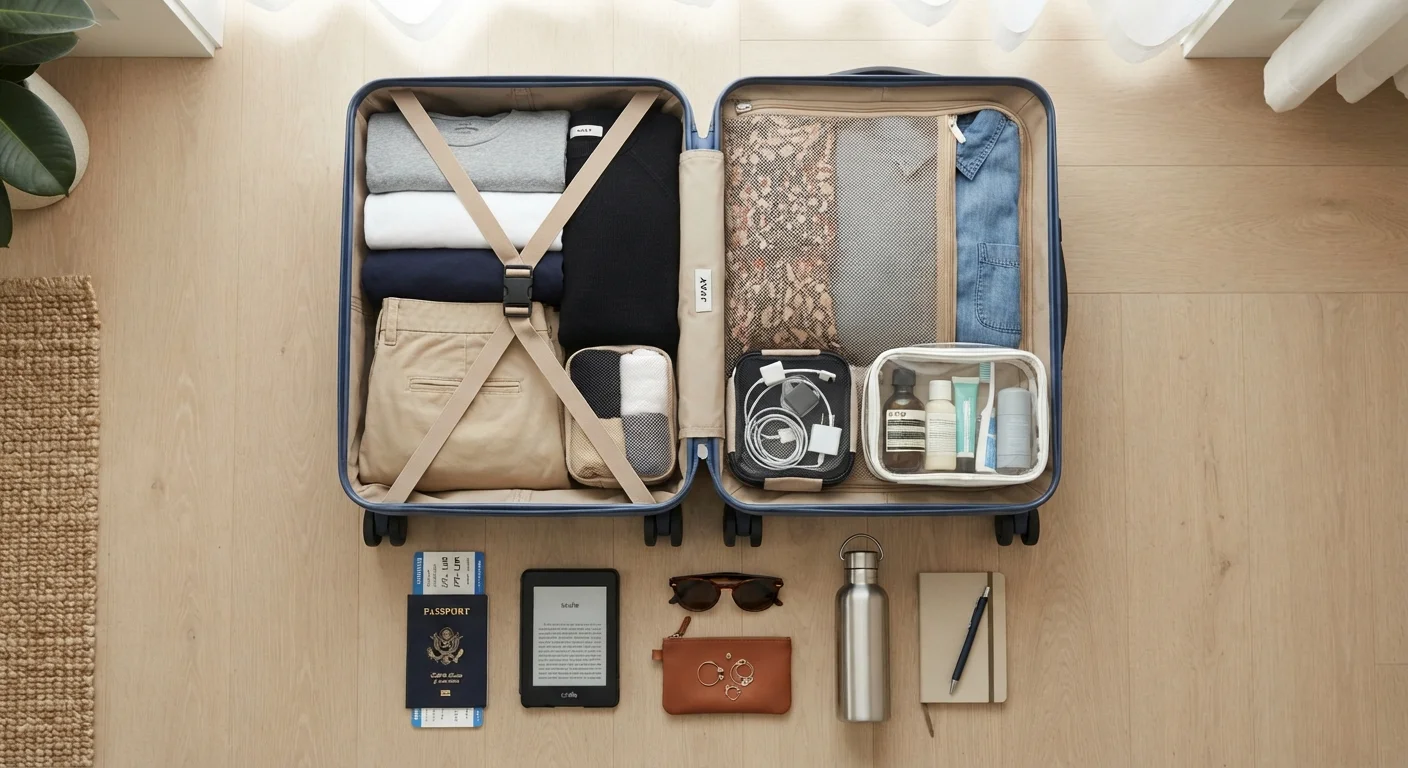
Photo: InsightsBlock.com | Access Information With Ease editorial
Key Takeaways
- Carry-on-only travel eliminates checked-bag fees and baggage-claim wait times.
- Most trips of up to one week are manageable with a well-packed carry-on.
- A capsule wardrobe built around neutral, mix-and-match pieces is the foundation of packing light.
- Liquids must comply with TSA's 3-1-1 rule: containers of 3.4 oz or less in one quart-sized clear bag.
- Some trips - cold-weather getaways, extended travel, gear-heavy activities - genuinely call for checked luggage.
- The biggest challenge isn't space; it's resisting the urge to over-pack "just in case."
What Carry-On-Only Travel Actually Means
Carry-on-only travel sounds simple: pack less, move faster, save money. But in practice, it's a skill that requires rethinking how you approach every item you throw in a bag. The payoff is real - no checked-bag fees, no waiting at baggage claim, and the freedom to walk off a plane and straight to your destination.
The core constraint is your bag's physical size and your airline's rules. Most major US carriers cap carry-on dimensions around 22" x 14" x 9", but budget airlines sometimes enforce stricter or different limits. Weight restrictions vary too - some international carriers impose carry-on weight limits as low as 15 pounds. Always check your specific airline's current policy before you pack.
If you're new to packing light entirely, our complete introduction to packing light walks through the foundational mindset shift that makes this whole approach click.
$35-$40
Typical one-way checked bag fee on major US carriers
Fee structures vary by airline, fare class, and loyalty status - always check current baggage policies when booking.
30+ min
Average time saved skipping baggage claim
Wait times at baggage carousels vary widely by airport and flight volume; carry-on travel eliminates this variable entirely.
3.4 oz
TSA liquid container limit per item
Per the TSA 3-1-1 rule, all liquids must fit in containers of 3.4 oz (100ml) or less, placed in one quart-sized clear bag.
Building a Wardrobe That Actually Fits
The biggest mistake first-time carry-on packers make isn't choosing the wrong bag - it's choosing the wrong clothes. A capsule wardrobe built around neutral colors and versatile, mix-and-match pieces is the backbone of carry-on-only success. Think: one pair of pants that works for hiking and dinner, a few tops that layer, one light jacket, and a single pair of shoes that covers most occasions.
The math is simple but counterintuitive. For a five-day trip, you don't need five outfits - you need five or six pieces that can create eight or nine combinations. Re-wearing is not a compromise; it's a strategy. Lightweight, quick-dry fabrics earn their place because they can be hand-washed in a sink and dry overnight, effectively doubling your wardrobe on longer trips.
Proven packing strategies like rolling, bundle packing, and the capsule method each have different strengths depending on your trip type - it's worth knowing which approach suits your clothing choices best.
Pack Your Bag, Then Remove 20%
Toiletries, Tech, and the Gear Question
Toiletries are where carry-on plans often unravel. The TSA's 3-1-1 rule limits you to containers of 3.4 oz or less, all fitting in one quart-sized clear zip-top bag. Solid alternatives - shampoo bars, solid cologne, and stick sunscreen - sidestep the liquid restriction entirely and tend to be lighter. For longer trips, buying certain toiletries at your destination is often more practical than cramming them in.
Tech gear deserves honest scrutiny. Laptops, tablets, cables, chargers, cameras, and accessories can consume a shocking portion of your bag's volume and weight. Audit every device: does it genuinely need to come, or is your phone sufficient? A single multi-port USB-C charger and a universal adapter take up far less space than a tangle of individual chargers.
Not all travel accessories are worth their footprint. Some genuinely solve problems - a packing cube system, a compact power bank, or a reliable travel lock. Others are clever-sounding but rarely used. For a grounded take on which gear consistently earns its space, see our guide to gear that solves real travel problems.
When Carry-On Only Isn't the Right Call
Carry-on-only travel has genuine limits, and knowing them saves frustration. Cold-weather destinations requiring heavy coats and layers, ski or snowboard trips with equipment, beach vacations involving bulky gear, and journeys longer than two weeks without reliable laundry access are all situations where a checked bag may be the honest answer.
The same applies to certain business trips: multiple formal outfits, presentation materials, or industry-specific equipment can push a bag beyond overhead-bin territory. There's no medal for suffering through a poorly packed carry-on when a checked bag would have made the trip smoother.
For travelers curious about going even further - reducing everything to a single backpack - it's worth understanding the real tradeoffs before committing. One-bag travel has devoted fans, but also real limitations that aren't always obvious from the outside.
Ultimately, carry-on-only travel is a tool, not a trophy. Used in the right situations, it genuinely improves a trip. Understanding both its strengths and its limits is what separates savvy travelers from ones who show up at the gate with an overstuffed bag and a stressed expression. For more ways to travel smarter and spend less, explore practical budget travel strategies that go beyond just packing light.
Frequently Asked Questions
The content provided on our blog site traverses numerous categories, offering readers valuable and practical information. Readers can use the editorial team’s research and data to gain more insights into their topics of interest. However, they are requested not to treat the articles as conclusive. The website team cannot be held responsible for differences in data or inaccuracies found across other platforms. Please also note that the site might also miss out on various schemes and offers available that the readers may find more beneficial than the ones we cover.