
Car Fluids Every Driver Should Know How to Check

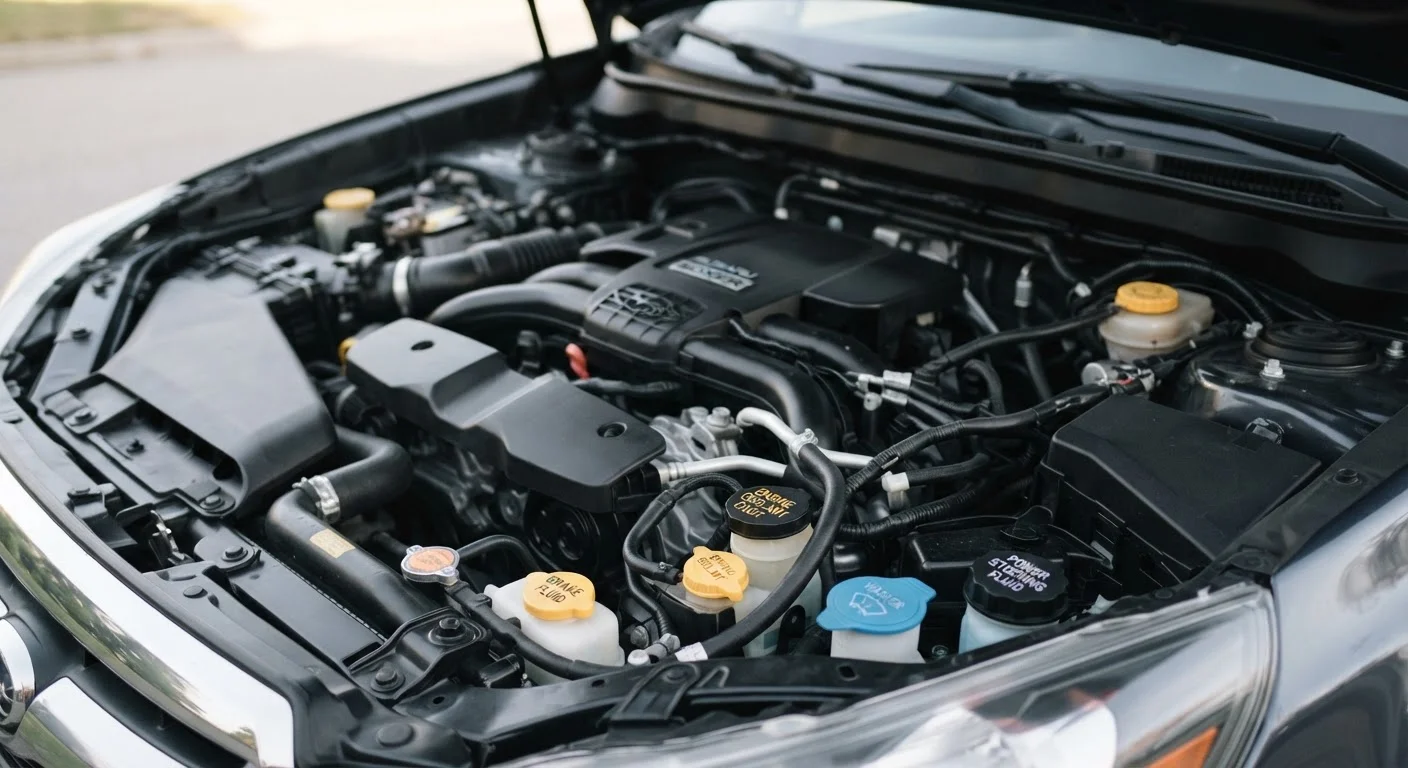
Photo: InsightsBlock.com | Access Information With Ease editorial
Key Takeaways
- Checking six essential fluids takes under 20 minutes and requires no special tools.
- Most fluid checks should be done on a cold, level engine for accurate readings.
- Color and smell are reliable early indicators of fluid degradation or contamination.
- Low or dirty fluids are often the first warning sign of a more serious mechanical issue.
- Consult your owner's manual for manufacturer-specified fluid types and service intervals.
Why Fluid Checks Matter More Than Most Drivers Realize
Fluids are the circulatory system of your vehicle. They lubricate moving parts, transfer heat, transmit force, and protect components from corrosion. When any one of them drops too low or degrades past its service life, the damage that follows is rarely cheap. A quart of engine oil costs a few dollars; an engine seized from oil starvation can cost thousands. The same logic applies across every system.
Despite this, fluid checks are among the most commonly skipped maintenance tasks. Many drivers only discover a problem when a warning light appears - by which point the damage may already be underway. Building a basic fluid inspection into your monthly routine is one of the most cost-effective habits you can adopt. For a broader monthly maintenance routine, see our guide to the monthly car checks drivers routinely skip.
If you're newer to car ownership and want a broader foundation, Car Maintenance From Scratch covers the essential habits and tasks every new driver should understand.
What you will need
What You'll Need Before You Start
No specialized equipment is required to check your car's fluids. A clean rag, your owner's manual, and 15-20 minutes are the essentials. For a complete list of helpful supplies, see below.
Owner's Manual
Identifies correct fluid specifications and reservoir locations specific to your vehicle.
Lint-Free Rags or Paper Towels
Used to wipe dipsticks clean and absorb any spills during the inspection.
Flashlight
Helps illuminate reservoir markings and fluid color in low-light engine bays.
Funnel
Prevents spills when adding fluid to narrow reservoir openings.
Park on a flat surface and turn the engine off. For most checks - especially engine oil - allow at least 10 minutes for the engine to cool and fluids to settle. Temperature and vehicle position both affect reading accuracy.
How to Check Each Fluid
Work through each fluid systematically. Starting at the engine oil dipstick and moving around the engine bay in a consistent pattern reduces the chance of skipping a reservoir. Each fluid has its own dipstick, reservoir, or inspection port - your owner's manual will show their exact locations for your specific vehicle.
Check Engine Oil
Engine oil is your engine's primary lubricant. Pull the oil dipstick (typically a brightly colored ring or handle), wipe it clean, reinsert it fully, then pull it again. The oil level should fall between the two marks on the dipstick. Healthy oil is amber to light brown. Oil that is black and gritty indicates it is overdue for a change. A milky or foamy appearance can signal coolant contamination - a condition that warrants prompt attention from a qualified mechanic.
Check Coolant (Antifreeze)
Coolant prevents your engine from overheating in summer and freezing in winter. Locate the translucent plastic coolant reservoir - it has MIN and MAX markings visible from the outside. The level should sit between those markers. Coolant is typically green, orange, or pink depending on the formulation; it should be clear, not murky or rusty. Do not mix different coolant types without consulting your owner's manual.
Check Brake Fluid
Brake fluid transmits the force from your pedal to your brakes. The reservoir is typically a small translucent container near the firewall on the driver's side. Check that the level sits between MIN and MAX. Fresh brake fluid is nearly clear to light yellow. Dark brown fluid indicates moisture absorption and degradation - brake fluid is hygroscopic (it absorbs water over time), which lowers its boiling point and compromises braking performance. Most manufacturers recommend replacing brake fluid every two years regardless of mileage.
Check Power Steering Fluid
Power steering fluid keeps steering effort manageable. Many modern vehicles use electric power steering and have no fluid reservoir - check your owner's manual first. If your car has hydraulic power steering, find the reservoir (often labeled with a steering wheel icon) and verify the level is within range. The fluid should be clear to light pink or red. Dark, burnt-smelling fluid or a foamy appearance suggests it needs replacement or that air has entered the system.
Check Transmission Fluid
Transmission fluid lubricates the gears and keeps the transmission cool. Automatic transmissions typically have a dipstick (some newer models are sealed and require professional service - check your manual). With the engine warm and running, shift through each gear, then check the dipstick in park. Healthy transmission fluid is bright red and slightly sweet-smelling. Dark brown or black fluid with a burnt odor means it should be serviced. Manual transmissions are usually checked via a fill plug on the transmission housing - this is typically a job for a mechanic.
Check Windshield Washer Fluid
Washer fluid is the simplest check but also easy to neglect. Locate the reservoir (marked with a windshield or wiper icon) and fill it to the indicated level using a premixed washer fluid rated for your climate. Do not substitute plain water - it can freeze, promote bacterial growth, and may not clean effectively. In winter climates, use a washer fluid with a freeze rating appropriate to local temperatures.
Never Open a Hot Radiator Cap
For guidance on how fluid checks fit into broader seasonal maintenance - particularly before winter or summer extremes - see our seasonal car prep guide. And if you're curious about common misconceptions around oil change intervals or fluid top-offs, Car Maintenance Myths That Keep Costing Drivers Money separates fact from fiction.
Make It a Monthly Habit
When to Stop DIY and See a Mechanic
Routine top-offs and visual inspections are well within reach for most drivers. But certain findings during a fluid check are signals to involve a professional. These include: oil that has a milky or foamy appearance (possible coolant leak into the engine), brake fluid that drops repeatedly between checks (possible brake line leak), transmission fluid that smells burnt and is very dark, or any fluid showing signs of contamination that you cannot identify.
Fluid service intervals - when to fully drain and replace, not just top off - vary by vehicle and driving conditions. Your owner's manual is the authoritative source. For a general reference on service intervals and what professional fluid services typically cost, see Routine Maintenance Schedules and What They Cost. Staying ahead of these intervals is directly tied to driver safety - well-maintained fluids keep critical systems like brakes and steering performing as designed.
The content provided on our blog site traverses numerous categories, offering readers valuable and practical information. Readers can use the editorial team’s research and data to gain more insights into their topics of interest. However, they are requested not to treat the articles as conclusive. The website team cannot be held responsible for differences in data or inaccuracies found across other platforms. Please also note that the site might also miss out on various schemes and offers available that the readers may find more beneficial than the ones we cover.