
Backpack vs. Rolling Suitcase for Long-Term Travel

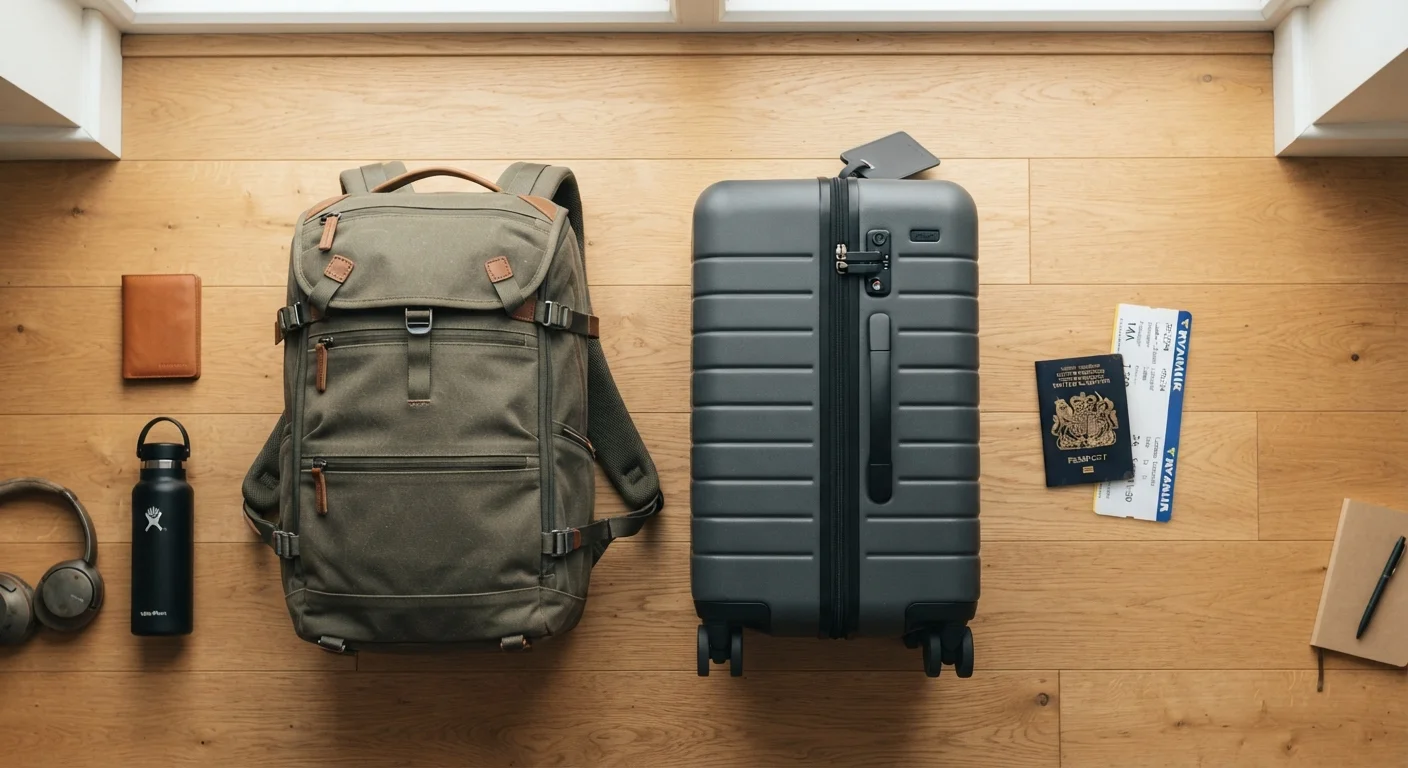
Photo: InsightsBlock.com | Access Information With Ease editorial
Key Takeaways
- Backpacks offer superior mobility on uneven terrain but can strain your back when fully loaded.
- Rolling suitcases provide better organization and easier packing but struggle on cobblestones, stairs, and unpaved paths.
- Airline carry-on compliance differs between backpack styles and suitcase dimensions - check before you fly.
- Long-term travelers moving frequently between cities often favor backpacks; slower, hotel-centric travel suits suitcases.
- Your typical accommodation type, terrain, and trip pace are the most reliable factors for choosing between the two.
Mobility and Terrain: Where Each Bag Shines
The most immediate difference between a travel backpack and a rolling suitcase shows up the moment you leave the airport. Backpacks distribute weight across your body and keep both hands free - a genuine advantage when navigating cobblestone alleys in Lisbon, climbing stairs to a Rome hostel, or boarding a crowded bus in Southeast Asia. You don't need a smooth surface; you just need your legs.
Rolling suitcases, by contrast, are a dream on flat, polished surfaces. Airport terminals, hotel lobbies, and cruise ship corridors are where four-wheel spinners earn their reputation. The problem emerges on anything uneven - gravel, curbs, metro escalators - where wheels catch, tip, or force you to carry the bag anyway, defeating the purpose.
For long-term trips covering multiple types of destinations, terrain versatility typically tips in the backpack's favor. But if your itinerary is anchored around a few cities with good infrastructure, a rolling suitcase earns its keep without the ergonomic tradeoffs. Check out one-bag travel considerations if you're weighing going even lighter than a standard backpack.
| Criterion | Travel Backpack | Rolling Suitcase |
|---|---|---|
| Terrain versatility | Excellent - handles any surface | Limited - struggles on uneven ground |
| Organization access | Moderate - requires packing cubes | Excellent - full clamshell visibility |
| Carry-on friendliness | Often fits carry-on/personal item limits | Carry-on sizes widely accepted; larger sizes checked |
| Physical strain | Sustained load - back and shoulders | Intermittent bursts - stairs, overhead bins |
| Security in crowds | Worn on body - harder to snatch | Stationary - easier to target |
| Adaptability to load size | Compresses when partially full | Fixed rigid structure regardless of fill |
| Garment care | Compression can wrinkle clothing | Flat packing protects garments better |
Packing and Organization: Access vs. Flexibility
Rolling suitcases win the organization battle. Clamshell openings give you a full view of your contents, and interior dividers, compression straps, and zippered pockets keep items separated and accessible. When you need a specific item without unpacking everything, a suitcase is the clear choice.
Travel backpacks typically use a top-loading or panel-loading design. Panel-loading packs (which open like a suitcase along the front) close the gap considerably, but even the best backpack organization requires more deliberate packing discipline. Packing cubes become less optional and more essential - they're effectively a filing system inside a soft container.
That said, backpacks offer a flexibility that suitcases can't match: compression. A half-full backpack collapses or cinches down; a half-full suitcase rattles and shifts. For trips where your load varies - buying souvenirs, picking up gear, or mailing things home - backpacks adapt more naturally. For proven techniques that work with either bag type, see packing strategies frequent travelers actually use.
~$350
Estimated added baggage fees on a multi-flight trip
Based on a rough estimate of 10 one-way flights at $35 per checked bag - actual fees vary by airline and route.
20 lbs
Practical weight limit for comfortable long-term carry
Travel ergonomics guidelines generally suggest keeping total pack weight under 20% of body weight for sustained comfort.
40L
Common sweet spot for carry-on backpack capacity
Many 40-liter backpacks fall within major airline carry-on volume guidelines, though dimensional limits vary by carrier.
Airlines, Fees, and Practical Logistics
Long-term travel inevitably involves multiple airlines, and luggage rules vary widely. A 40-liter travel backpack often fits within carry-on or personal item dimensions on most major carriers - though this is never guaranteed, and budget airlines in Europe and Asia are increasingly strict about size enforcement. Verify current policies with each airline before you travel.
Rolling suitcases in carry-on sizes (typically 22 x 14 x 9 inches for US domestic flights) are accepted on most full-service airlines but frequently get gate-checked on smaller regional jets. Larger checked suitcases mean baggage fees that accumulate quickly across a multi-month trip. A rough estimate: one checked bag at $35 each way on a domestic flight, taken 10 times during a trip, adds $350 to your travel costs before anything else.
Backpacks also tend to be more theft-resistant in crowded transit environments - a suitcase left upright on a train platform is easier to grab and roll away. That said, suitcase locks and cable systems do offer their own security layer. Our guide on TSA-approved locks and security screening is worth reviewing before your first international departure.
Physical Comfort and Long-Term Wearability
Carrying a loaded backpack for extended periods is physically demanding, and this is the factor most travelers underestimate before departure. A well-fitted pack with a proper hip belt transfers the majority of weight from your shoulders to your hips - but fit is critical. A backpack sized for someone else's torso length or packed beyond its practical capacity becomes a back-injury waiting to happen.
Rolling suitcases eliminate that physical burden almost entirely on flat ground. The ergonomic cost comes in short, intense bursts - lifting overhead into a bin, hauling up stairs - rather than sustained carrying. For travelers with existing shoulder, neck, or back conditions, the intermittent strain of a suitcase is often more manageable than the continuous load of a backpack.
Packing weight itself matters enormously for both options. Keeping total weight under 20 pounds - regardless of bag type - dramatically improves comfort and mobility. For a look at how to trim your kit further, packing a full week into a personal item bag illustrates just how lean a packing list can get with the right strategy.
The content provided on our blog site traverses numerous categories, offering readers valuable and practical information. Readers can use the editorial team’s research and data to gain more insights into their topics of interest. However, they are requested not to treat the articles as conclusive. The website team cannot be held responsible for differences in data or inaccuracies found across other platforms. Please also note that the site might also miss out on various schemes and offers available that the readers may find more beneficial than the ones we cover.