
Hard-Shell vs. Soft-Shell Luggage: Which Holds Up Better on the Road

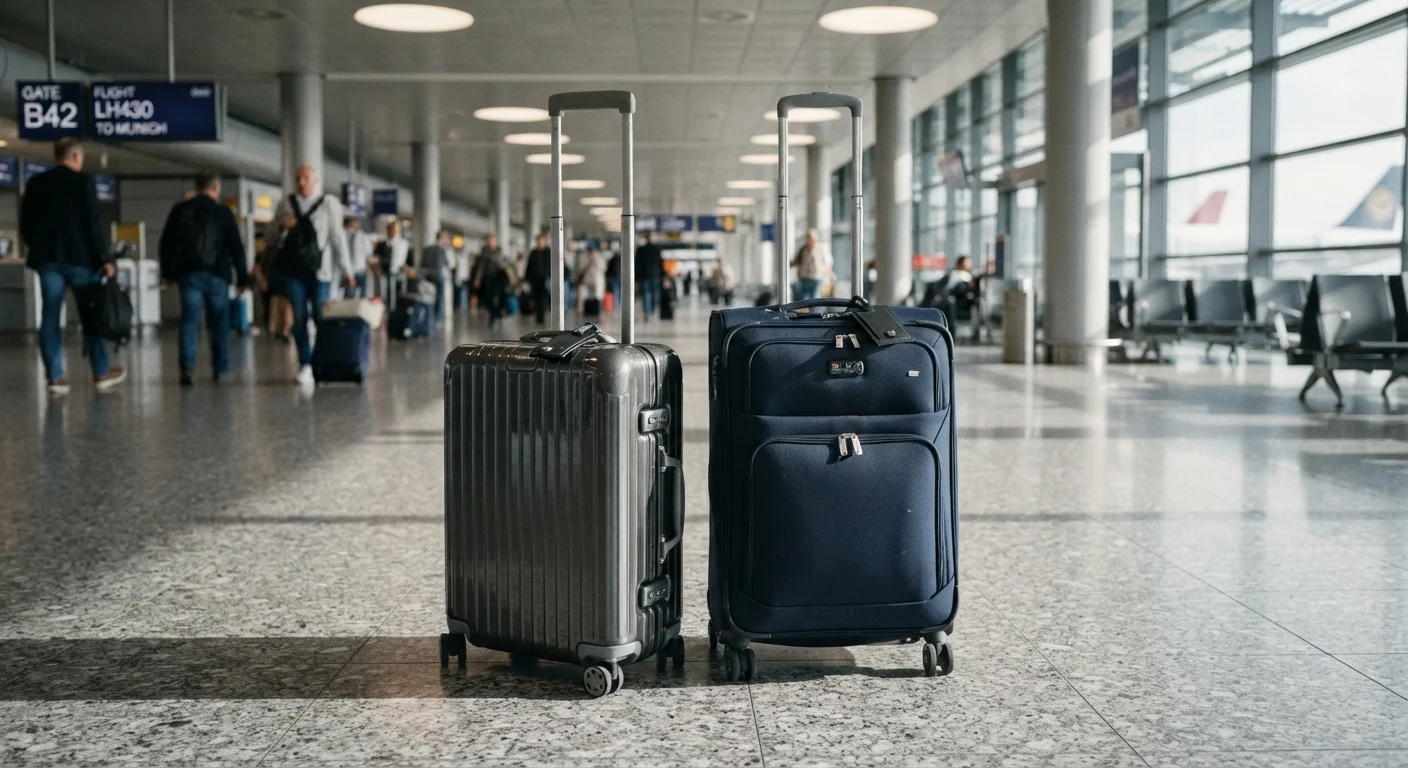
Photo: InsightsBlock.com | Access Information With Ease editorial
Key Takeaways
- Hard-shell luggage offers superior protection against impact and moisture, making it ideal for checked baggage.
- Soft-shell bags are typically lighter and more flexible, giving you more packing versatility and easier overhead bin fitting.
- Hard-shell cases can crack under sustained pressure; soft-shell bags are more vulnerable to cuts and scuffs.
- Neither shell type automatically performs better on durability - construction quality and materials matter more than the shell alone.
- Your travel style - carry-on only, frequent checking, or adventure travel - should drive the decision.
What Sets These Two Shell Types Apart
Hard-shell luggage is typically made from polycarbonate, ABS plastic, or a polycarbonate-ABS blend. These materials give the bag a rigid outer surface that resists dents and deflects impact. Soft-shell luggage uses woven fabrics - ballistic nylon and polyester are common - stretched over an internal frame or left semi-structured. The difference in construction creates meaningfully different performance profiles on the road.
Hard-shell cases offer a sealed, clamshell design that keeps moisture and airport grime out. Soft-shell bags trade that weather seal for pliability: you can overstuff them slightly, compress them into a tight space, or zip an extra layer into an expandable panel. For a deeper look at how packing method interacts with bag choice, see our guide to packing strategies frequent travelers actually use.
| Criterion | Hard-Shell Luggage | Soft-Shell Luggage |
|---|---|---|
| Impact protection | Strong - rigid shell deflects blows | Moderate - fabric absorbs but doesn't deflect |
| Weather resistance | High - sealed clamshell design | Lower - fabric absorbs moisture |
| Weight | Generally heavier | Generally lighter |
| Flexibility / overpacking | None - fixed volume | Some - expandable panels common |
| External pockets | Rarely included | Usually included |
| Crack/puncture risk | Cracks under sustained pressure | Can be cut or punctured |
| Overhead bin fit | Fixed - no give | Can compress slightly to fit |
| Interior organization | Two-sided clamshell layout | Varies - often one main compartment |
Durability: Where Each Type Wins and Loses
Hard-shell bags handle point impacts - a bag dropped on its corner, a heavy item dropped on top - better than fabric. But they have a specific vulnerability: sustained sideways pressure. Stack enough weight on a polycarbonate shell and it will crack rather than flex. Lower-grade ABS shells are especially prone to this. On the flip side, soft-shell bags absorb and distribute pressure across the fabric, making them less likely to crack - but they're easier to cut, scuff, or puncture.
Construction quality matters enormously in both categories. Zipper grade, wheel housing reinforcement, and frame materials determine real-world longevity far more than shell type alone. A well-made soft-shell with YKK zippers and aluminum corner reinforcement will outlast a budget hard-shell in most travel scenarios.
~30%
Of checked bags reported damaged annually
Industry estimates suggest roughly 30% of travelers report some form of checked baggage damage over the course of frequent travel, with corner and zipper damage most common regardless of shell type.
1-2 lbs
Typical weight difference per bag size
Hard-shell luggage generally runs one to two pounds heavier than comparable soft-shell bags in carry-on and checked sizes, according to luggage category reviews.
If you travel to destinations where bag security is a concern, understanding your locking options matters too. Our article on TSA luggage locks and airport security screening explains what to look for.
Weight, Space, and Packing Practicality
Hard-shell luggage tends to run heavier for equivalent interior volume because the rigid shell itself adds mass. On airlines with strict weight limits - particularly budget carriers - this can matter. A hard-shell carry-on might weigh a pound or two more than a comparable soft-shell, which eats directly into your clothing allowance.
Soft-shell bags almost always offer external pockets, which hard-shell designs typically cannot. If you want quick access to a travel adapter, passport, or headphones without opening the main compartment, a soft-shell bag is more accommodating. Hard-shell bags compensate by offering a cleaner interior organization: two equal halves with compression straps, which suits travelers who prefer to pack by category rather than layer.
If you're weighing the whole rolling-versus-carrying question alongside shell type, our backpack vs. rolling suitcase comparison covers that decision in detail. And for accessories that genuinely improve any bag setup, check our rundown of travel accessories that solve real problems.
Expandable Panels: A Soft-Shell Advantage
The content provided on our blog site traverses numerous categories, offering readers valuable and practical information. Readers can use the editorial team’s research and data to gain more insights into their topics of interest. However, they are requested not to treat the articles as conclusive. The website team cannot be held responsible for differences in data or inaccuracies found across other platforms. Please also note that the site might also miss out on various schemes and offers available that the readers may find more beneficial than the ones we cover.