
What Packing Cubes Do (and What They Can't Fix)

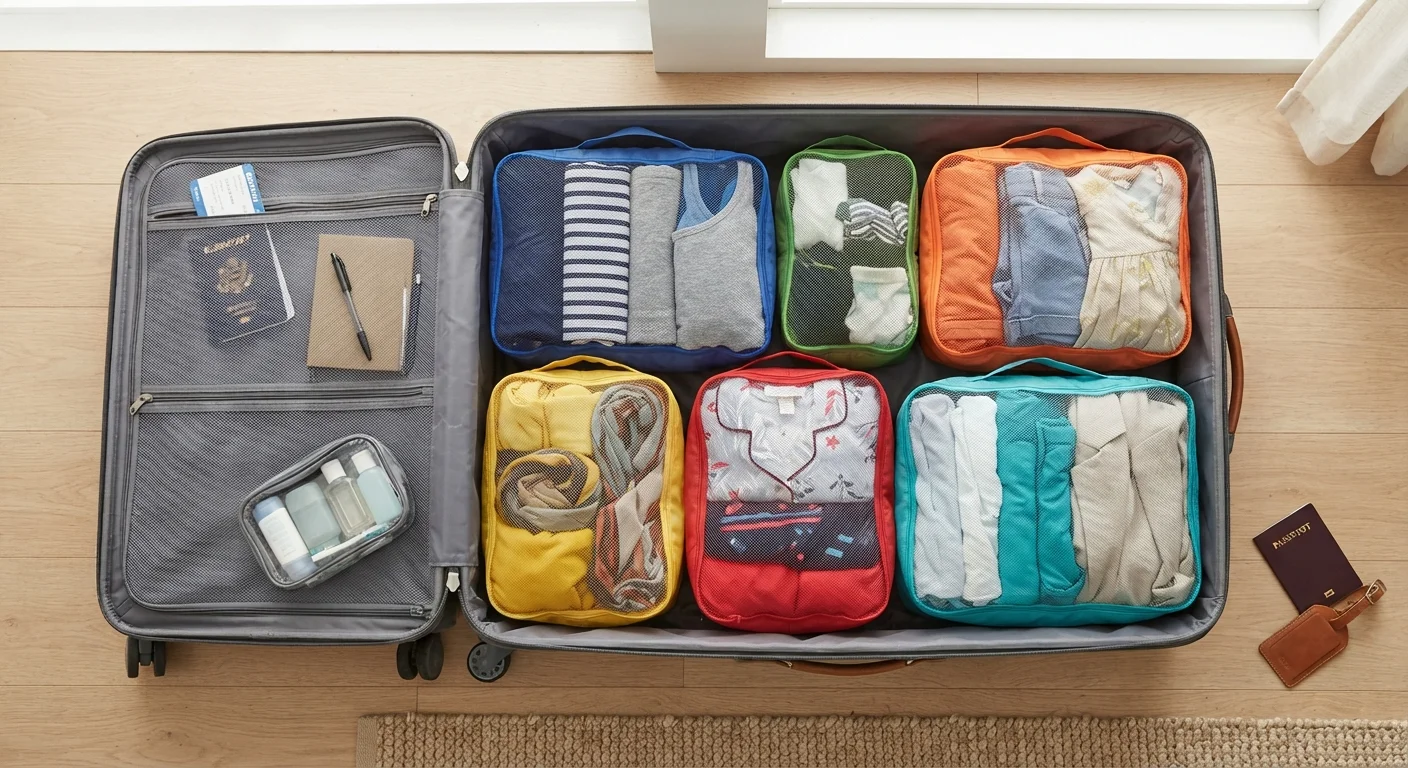
Photo: InsightsBlock.com | Access Information With Ease editorial
Key Takeaways
- Packing cubes organize your bag but do not meaningfully reduce the total volume of what you pack.
- They genuinely speed up hotel room unpacking and help separate clean from dirty clothes mid-trip.
- Cubes work best alongside deliberate packing strategies, not as a substitute for packing less.
- Compression cubes with double zippers are the only type that can modestly reduce garment bulk.
- Travelers who hop between multiple accommodations benefit most from the speed and modularity cubes provide.
What Packing Cubes Actually Do
The honest job of a packing cube is compartmentalization, not compression. When you slide a cube of folded shirts into your suitcase, you're creating a defined, stable block that won't migrate into your shoes or tangle with your belts mid-flight. That stability makes your bag easier to pack, easier to search, and easier to repack on the fly.
The practical benefits show up most clearly on multi-destination trips. If you're moving through four cities in ten days, pulling a single cube out of your bag rather than rifling through a jumbled main compartment saves real time and frustration. Some travelers use the cube system to separate clean from dirty clothes throughout the trip - designating one cube as a de facto laundry bag.
Cubes also make hotel-room unpacking optional. Instead of emptying your bag onto a bed, you can simply slide cubes into drawers and be done. For short stays, this alone is worth the investment for many travelers.
Assign One Cube as a Dirty Laundry Bag
The Limits You Should Know About
Here's where honest conversation matters: packing cubes do not make your bag smaller. A standard cube filled with clothes occupies the same cubic inches those clothes would take up loose. What you gain is structure - not capacity. If you're already overpacking, cubes will organize your excess, not eliminate it.
Compression cubes - those with a second zipper that forces air out of the mesh panel - are a partial exception. They can reduce soft, air-trappy items like fleece or synthetic puffers by a noticeable margin. But the compression is modest, and the cubes themselves weigh more, which eats into any gain on weight-restricted carry-ons.
Cubes also add a small amount of their own weight to your bag. A set of four lightweight cubes typically adds around 200-350 grams depending on material and construction. That's rarely a deal-breaker, but it matters if you're targeting strict carry-on weight limits.
200-350g
Typical weight added by a 4-cube set
Weight varies by material; mesh-panel cubes run lighter than solid nylon versions with structural frames.
~15-25%
Bulk reduction from compression cubes
Compression effect depends heavily on garment type; soft synthetics and fleece compress more than denim or structured clothing.
Who Gets the Most Out of Them
Packing cubes deliver the most value to specific traveler profiles:
- Multi-stop travelers who repack frequently and need to locate items fast.
- Family packers sharing one large bag, where each person gets an assigned cube or color.
- Light packers who've already edited ruthlessly - cubes keep a lean wardrobe tidy rather than helping reduce a heavy one.
If you stay in one place for a week, unpack fully into closet space, and travel alone with a predictable routine, the organizational payoff may not justify the cost or added weight. For that traveler, understanding core packing-light principles will do more to improve the experience than adding gear.
Where Cubes Fit in a Broader Packing System
Packing cubes are a tool, not a system. The travelers who get the most from them have already addressed the harder work: editing their packing list, choosing versatile clothing, and deciding on a repeatable packing system they can deploy for any trip. Cubes slot into that system as the organizational layer, not the foundation.
It's also worth pairing cube use with a deliberate folding or rolling method. The way garments go into a cube affects both fit and wrinkle potential - for a practical breakdown, our rolling vs. folding comparison covers the evidence clearly.
The travelers who benefit least are those hoping cubes will solve an overpacking habit. If you regularly struggle to close your bag, the fix is identifying what's actually driving the overpack - not adding more organizational gear to an already over-full bag.
Frequently Asked Questions
The content provided on our blog site traverses numerous categories, offering readers valuable and practical information. Readers can use the editorial team’s research and data to gain more insights into their topics of interest. However, they are requested not to treat the articles as conclusive. The website team cannot be held responsible for differences in data or inaccuracies found across other platforms. Please also note that the site might also miss out on various schemes and offers available that the readers may find more beneficial than the ones we cover.